


Who this plan is for
An upper/lower split trains the upper body one day and the legs the next, twice a week. The plan above is for lifters with six months or more of steady training who have four days for the gym and want muscle first. Two more versions sit under it: Intermediate Upper/Lower Dumbbell, 4 days, for a home or a small gym with dumbbells, an adjustable bench and a pull-up bar, and Advanced Upper/Lower Strength, 4 days, for experienced lifters who train for their heaviest bench press, squat, overhead press and deadlift.
Choose something else if:
- You have three days. A push pull legs split covers the body once in three sessions; a full-body plan covers it three times.
- You are new to lifting. Start with the 3-day full-body plan and come back when it stops moving.
How the upper/lower week works
| Day | Session | Opens with |
|---|---|---|
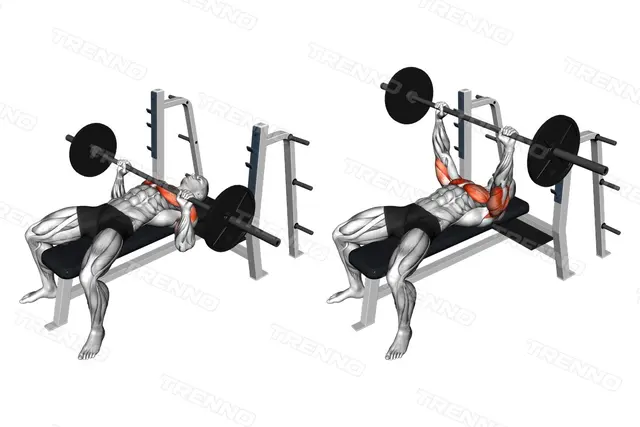
| Monday | Upper Body: Bench Press | Barbell Bench Press |
| Tuesday | Lower Body: Squat | Barbell Back Squat |
| Wednesday | Rest | |
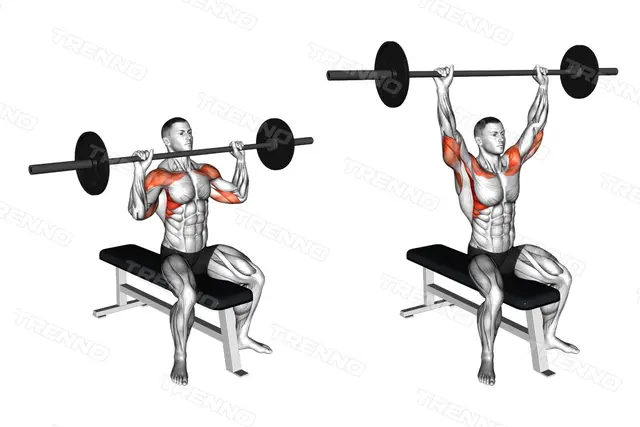
| Thursday | Upper Body: Overhead Press | Seated Barbell Overhead Press |
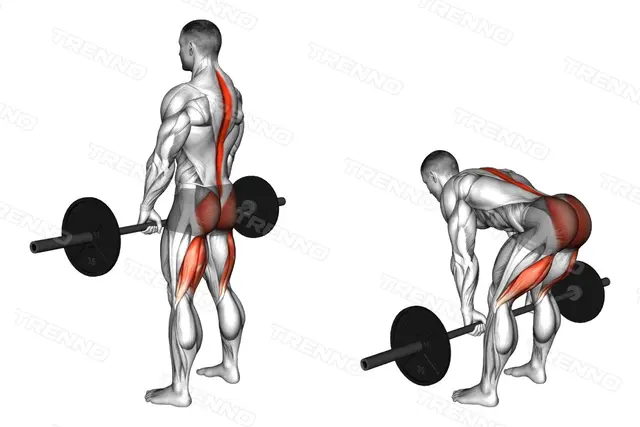
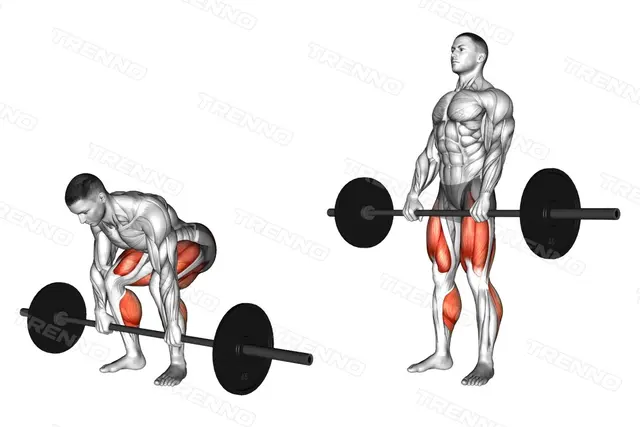
| Friday | Lower Body: Deadlift | Deadlift |
| Saturday | Rest | |
| Sunday | Rest |
Two days on, one off, two on, two off. No body part is trained on two days in a row, and the two lower days sit three days apart, so the heavy squats and the deadlifts never meet tired legs. If your week needs other days, keep that one rule: at least one day between the two lower days.
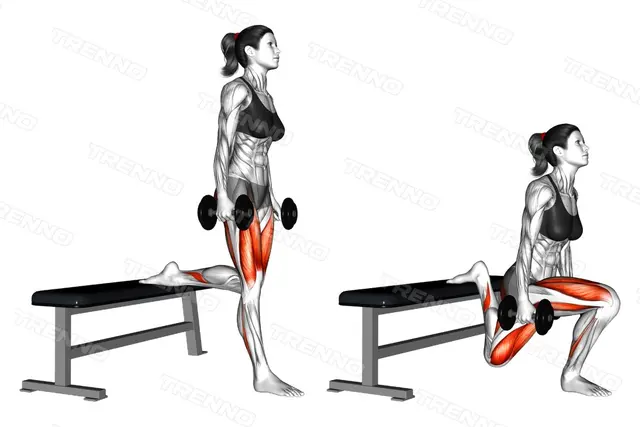
The two days of each half are built differently. The first upper day presses and rows horizontally, the second presses overhead and pulls from above. The first lower day is built around the squat, the second around the hinge, with single-leg work. Each movement gets one hard day a week, and each muscle is trained twice.
Counted by the body part each exercise is filed under in our exercise library, the three versions give these hard sets a week:
| Body part | Muscle, gym | Muscle, dumbbells | Strength |
|---|---|---|---|
| Chest | 10 | 10 | 8 |
| Back | 14 | 12 | 14 |
| Shoulders | 10 | 10 | 11 |
| Quadriceps | 13 | 10 | 14 |
| Hamstrings | 9 | 10 | 6 |
| Calves | 8 | 7 | 4 |
Two days per muscle has good support: an early meta-analysis found that, with the weekly work equal, training a muscle twice a week grew more than once (Schoenfeld and colleagues, 2016), and in strength studies higher frequencies brought bigger gains, mostly because they added volume (Grgic and colleagues, 2018).
Sets, reps, rest and effort
- The opener of each day: 4 sets of 6 to 10 reps after 2 warm-up sets, with 2:30 of rest. The Deadlift takes 3 sets of 5 to 8 and 3:00.
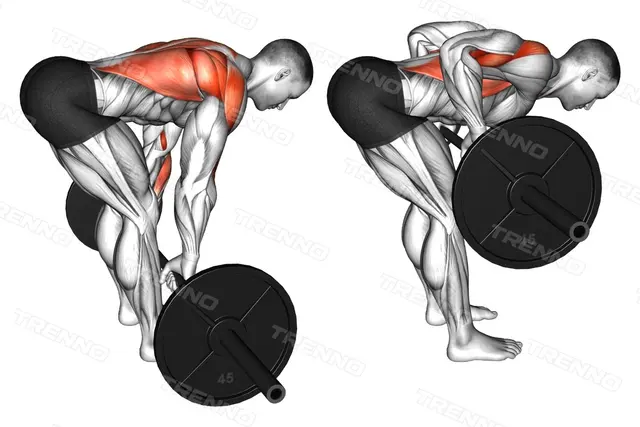
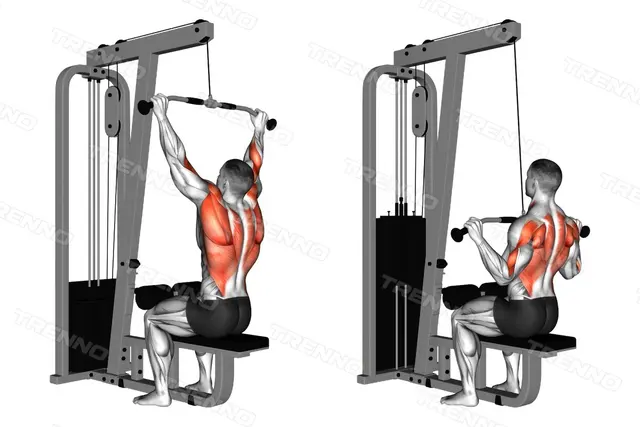
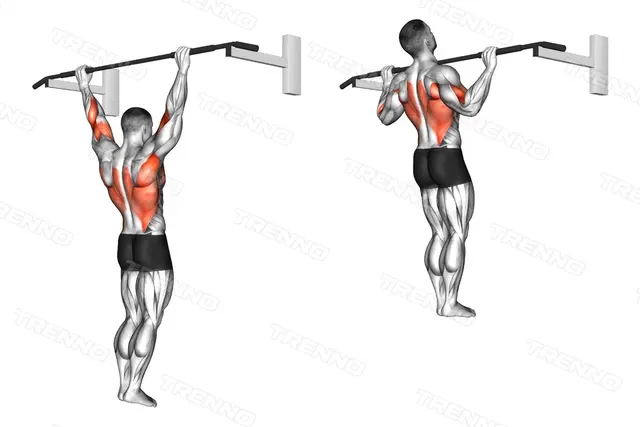
- The second lift of the upper days takes 4 sets too: the Bent-Over Barbell Row on the bench day, the Wide-Grip Pull-Up on the overhead day.
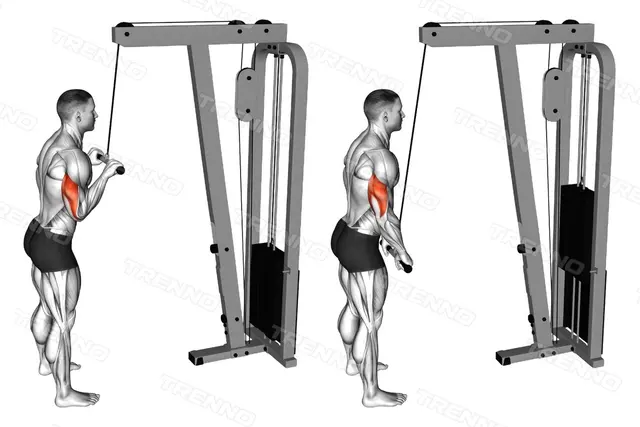
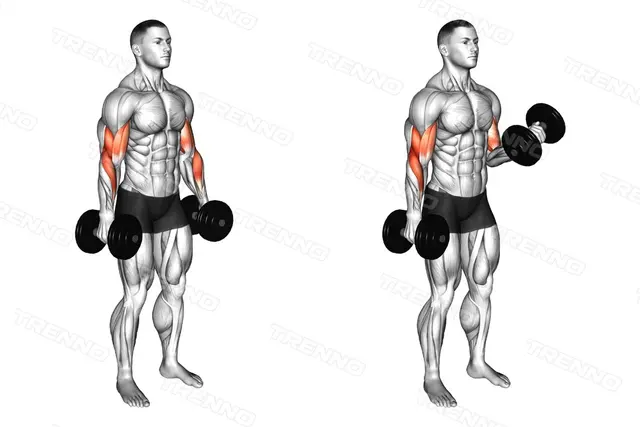
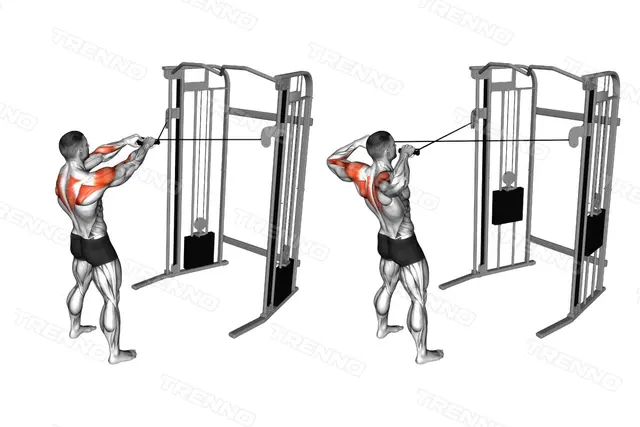
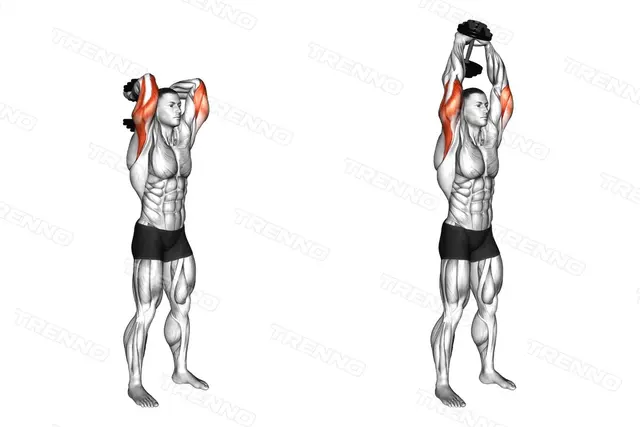
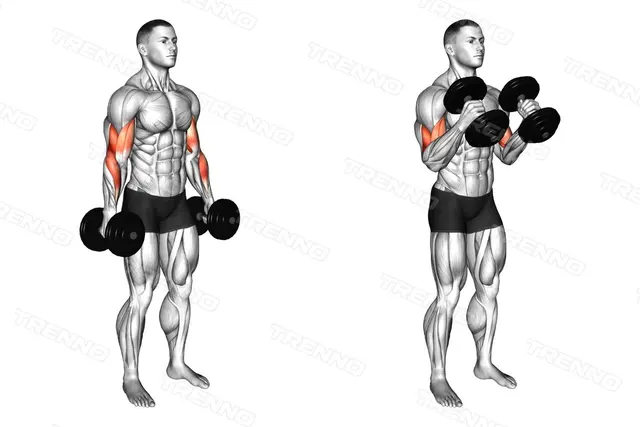
- Everything after runs 3 or 4 sets in ranges from 8 to 12 up to 12 to 20, with 1:30 of rest on most of the bigger exercises and 1:00 on most of the small ones. The arms close each upper day as a superset: the Cable Triceps Pushdown with the Alternating Dumbbell Curl, then the Overhead Dumbbell Triceps Extension with the Dumbbell Hammer Curl.
Stop the heavy sets with 1 to 3 reps in reserve (the clean reps you could still have done), the small exercises with 0 to 2. Rest in full on the openers: in trained men, 3-minute rests built more strength and more muscle than 1-minute rests over 8 weeks (Schoenfeld and colleagues, 2016).
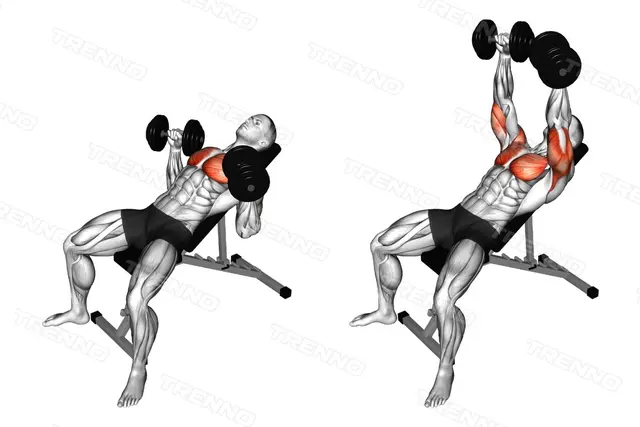
The strength version works differently. Each main lift has a heavy day of 5 sets of 3 to 5 reps with 3:00 of rest (the Deadlift 4 sets), and comes back lighter on another day: the Standing Barbell Overhead Press at 3 sets of 6 to 10 on the bench day, the Incline Barbell Bench Press on the press day, the Front Squat on the deadlift day, the Romanian Deadlift on the squat day. That is the heavy day and the volume day of each lift. Heavy loads are what build the most one-rep strength, while muscle grows across a wide range of loads (Schoenfeld and colleagues, 2017).
How to progress
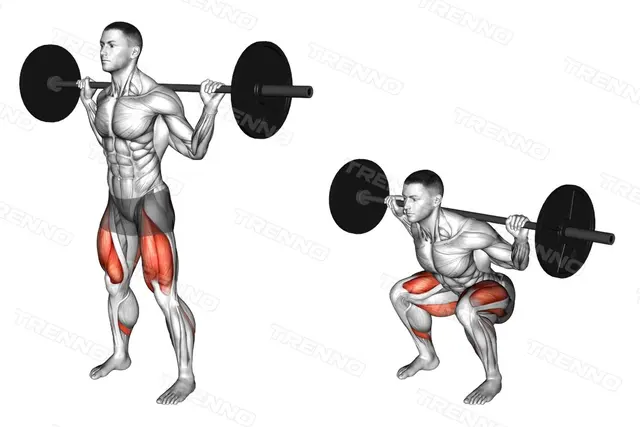
Use double progression, as in our progressive overload guide: hold the weight until every set reaches the top of its range, then add the smallest step, 2.5 kg on a barbell (5 lb in a gym that loads pounds). The Barbell Back Squat on Tuesday, 4 sets of 6 to 10:
| Week | Weight | Reps per set | Next session |
|---|---|---|---|
| 1 | 80 kg (about 175 lb) | 8, 8, 7, 6 | same weight |
| 2 | 80 kg | 9, 9, 8, 7 | same weight |
| 3 | 80 kg | 10, 10, 9, 8 | same weight |
| 4 | 80 kg | 10, 10, 10, 10 | add 2.5 kg |
| 5 | 82.5 kg | 8, 8, 7, 7 | same weight |
| 6 | 82.5 kg | 9, 9, 8, 8 | same weight |
In the strength version the rule is stricter: the weight goes up only when every heavy set reaches 5 reps, by the smallest plate the gym has. Expect weeks without a new number: an advanced lifter’s progress is counted in months. In the dumbbell version the next pair is often 2 kg or 5 lb heavier per hand, a big jump on a light weight, so fill the whole range before you move up.
Three versions
| Muscle, gym | Muscle, dumbbells | Strength | |
|---|---|---|---|
| Level | Intermediate | Intermediate | Advanced |
| Main lifts | 4 × 6 to 10, the deadlift 3 × 5 to 8 | 4 × 6 to 10 or 8 to 12 | 5 × 3 to 5, the deadlift 4 |
| Rest on the main lifts | 2:30, the deadlift 3:00 | 1:30 | 3:00 |
| Needs | A full gym | Dumbbells, a bench, a pull-up bar | A full gym |
| A session | 50 to 60 minutes | about 55 minutes | 50 to 60 minutes |
Without a pull-up bar, the dumbbell version swaps the Pull-Up for the Dumbbell Pullover and the Chin-Up for the Bent-Over Dumbbell Row.
Substitutions
| Instead of | In a busy or small gym | With dumbbells only |
|---|---|---|
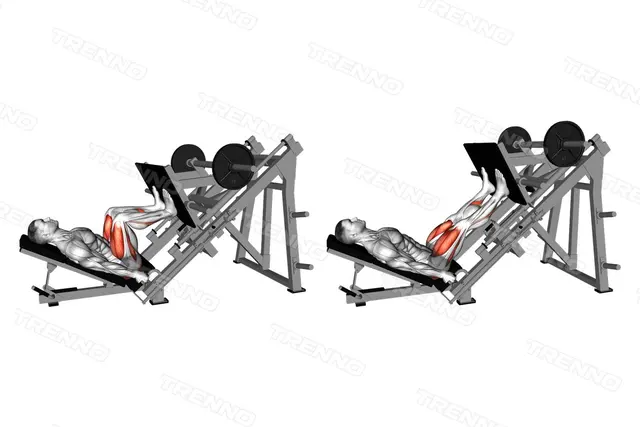
| Barbell Back Squat | Hack Squat or Leg Press | Goblet Squat |
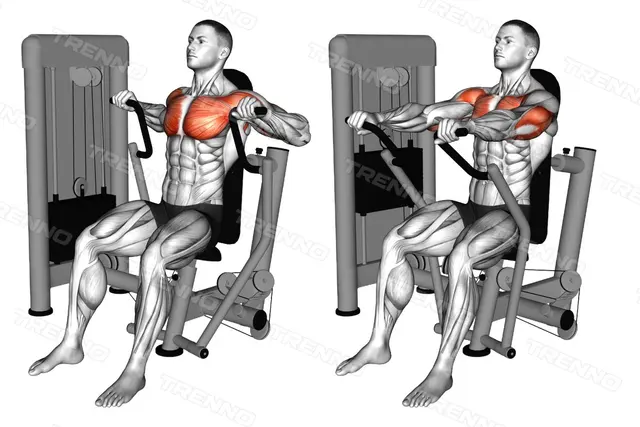
| Barbell Bench Press | Machine Chest Press | Dumbbell Bench Press, or the Dumbbell Floor Press without a bench |
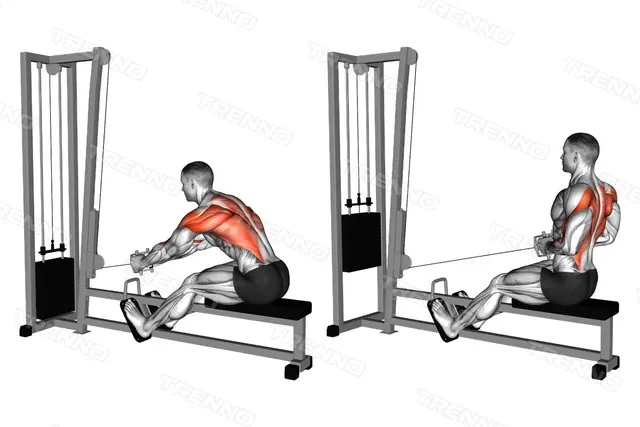
| Bent-Over Barbell Row | Seated Cable Row | One-Arm Dumbbell Row |
| Seated Barbell Overhead Press | Machine Shoulder Press | Seated Dumbbell Overhead Press |
| Wide-Grip Pull-Up | Lat Pulldown | Dumbbell Pullover |
| Deadlift | Trap Bar Deadlift | Dumbbell Deadlift |
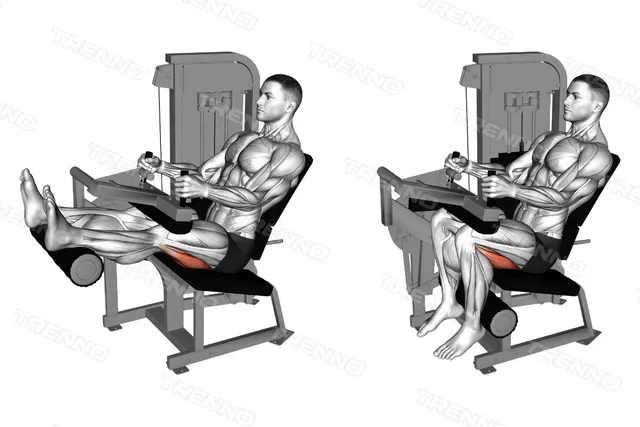
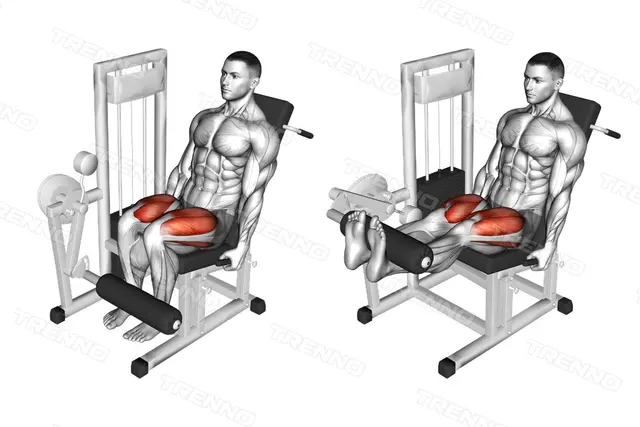
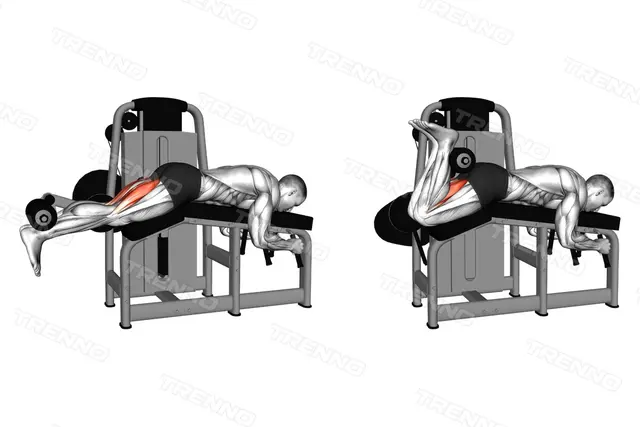
| Seated Leg Curl | Lying Leg Curl | Dumbbell Romanian Deadlift |
Keep the sets, the reps and the rest of the exercise you replace.
How long a session takes
At about 40 seconds a working set, the rest the plan prescribes, a minute per warm-up set and 5 minutes to set up and move between stations, the upper days take 55 to 60 minutes and the lower days about 50. Add 5 to 10 minutes of easy warm-up. Four sessions make about 4 hours a week.
Common mistakes
- Putting the two lower days back to back. The deadlift day then starts on legs still tired from the squats.
- Shortening the rest on the openers to finish sooner. The first lift is the one the rest is for.
- Starting the strength version too early. Sets of 3 to 5 are where technique breaks first; the plan assumes lifts that already hold up.
- Changing exercises every few weeks. Progress is measured on the same lift, week after week.
FAQ
Is an upper/lower split better than push pull legs?
On four days, it trains every muscle twice; push pull legs needs six days for that. When the weekly sets are the same, a meta-analysis of 25 studies found no real difference between training a muscle more or less often (Schoenfeld and colleagues, 2019). Choose by the days you have.
Can I run an upper/lower split three days a week?
Yes: upper, lower, upper one week, lower, upper, lower the next. Each half is then trained three times in two weeks, and the plan takes longer to cycle.
Which days should I rest?
Any, as long as one day sits between the two lower days. Two rest days together, as in the table above, suit most working weeks.
Where are the arms and the abs?
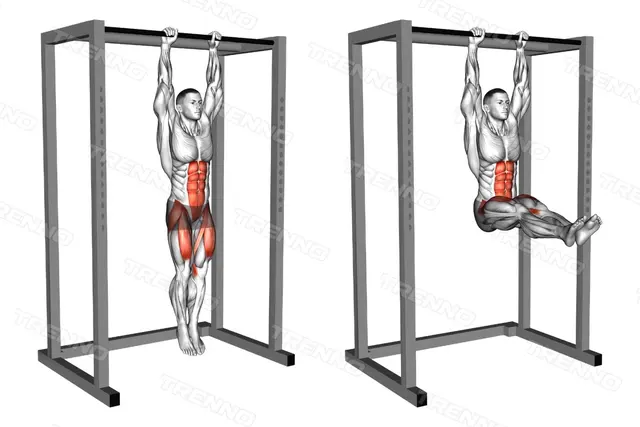
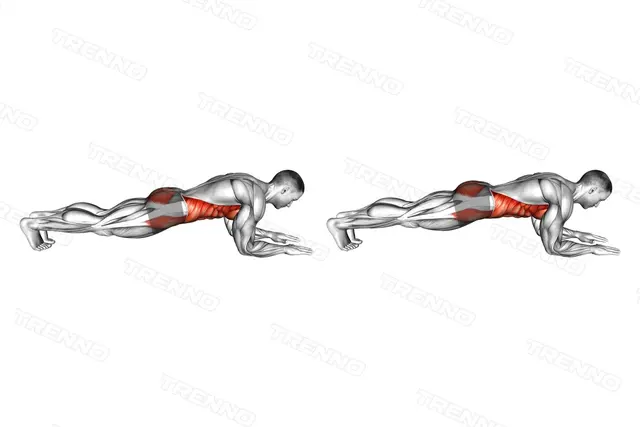
The arms close both upper days as a superset, and each lower day ends with a core exercise: the Hanging Leg Raise after the squats, the Plank after the deadlifts.
How long should I run it?
The plan is written for 12 weeks. After that, run it again from slightly heavier starting weights, or move to the strength version if your lifts are solid and strength is what you want.
Sources
- Schoenfeld BJ, Ogborn D, Krieger JW. Effects of resistance training frequency on measures of muscle hypertrophy: a systematic review and meta-analysis. Sports Medicine, 2016.
- Grgic J, Schoenfeld BJ, Davies TB, Lazinica B, Krieger JW, Pedisic Z. Effect of resistance training frequency on gains in muscular strength: a systematic review and meta-analysis. Sports Medicine, 2018.
- Schoenfeld BJ, Grgic J, Krieger J. How many times per week should a muscle be trained to maximize muscle hypertrophy? Journal of Sports Sciences, 2019.
- Schoenfeld BJ, Grgic J, Ogborn D, Krieger JW. Strength and hypertrophy adaptations between low- vs. high-load resistance training: a systematic review and meta-analysis. Journal of Strength and Conditioning Research, 2017.
- Schoenfeld BJ and colleagues. Longer interset rest periods enhance muscle strength and hypertrophy in resistance-trained men. Journal of Strength and Conditioning Research, 2016.
All three programs are in Trenno’s Explore with their days, sets and rest times. The previous session’s sets show beside the empty ones, and the rest timer starts when you tick a set, so the full 2:30 on the openers takes no watching.