


Who this plan is for
Fat comes off when you use more energy than you eat, week after week. Training has two jobs in that: it keeps your muscle while the scale goes down, and it adds activity. The plan above is for intermediate lifters, about six months of consistent training or more, who want to lose fat without losing strength: four full-body gym sessions a week, each with four strength exercises and a few minutes of cardio at the end.
Pick another plan if:
- You are in your first months of lifting. Learn the lifts on three days first with the 3-day full-body plan, and walk on the days between.
- You train at home. Home HIIT, No Equipment, in the cards above, runs three short circuits a week with no equipment at all. The HIIT workout at home walks through it.
- You would rather move than rest between sets. Full-Body Conditioning Circuit, also above, runs each session as rounds.
What lifting does while you lose fat
- It keeps the muscle. In six trials of older adults with obesity on a calorie-restricted diet, lifting three times a week prevented about 94 percent of the lean mass the diet alone took, with the same fat loss (Sardeli and colleagues, 2018).
- Strength keeps rising; muscle growth slows. In a meta-analysis of lifting during an energy deficit, strength gains matched those of people eating enough, while lean mass gains were impaired, and a deficit of about 500 kcal a day was enough to stop them. The authors advise people lifting to keep their muscle during weight loss to stay under that deficit (Murphy and Koehler, 2022).
- It does not speed up weight loss by itself. The American College of Sports Medicine’s position stand says resistance training does not enhance weight loss, but may increase fat-free mass and the loss of fat mass (Donnelly and colleagues, 2009).
- Cardio moves the scale, lifting keeps the lean mass. In an 8-month trial of 119 sedentary adults with overweight or obesity, aerobic training cut body mass and fat mass more than lifting; lifting added more lean mass; doing both did both, in twice the time (Willis and colleagues, 2012).
So the plan is built on lifting, with cardio where it costs the lifting least: at the end.
How the week works
| Day | Session | Strength | Finisher |
|---|---|---|---|
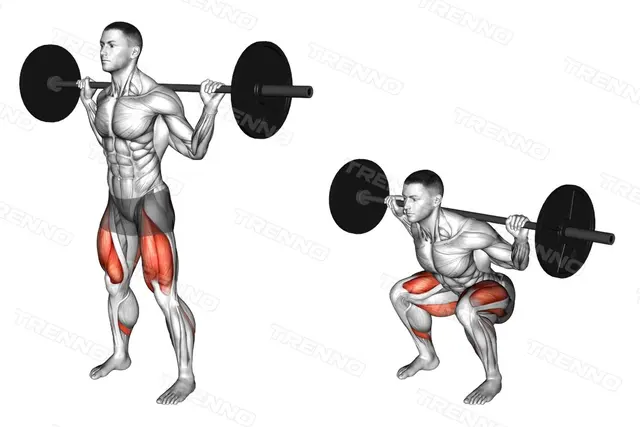
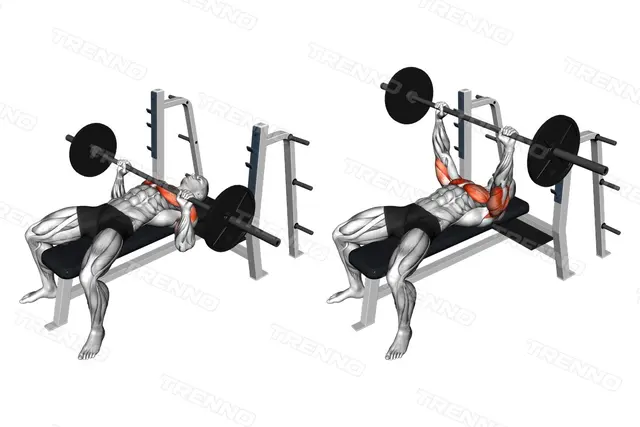
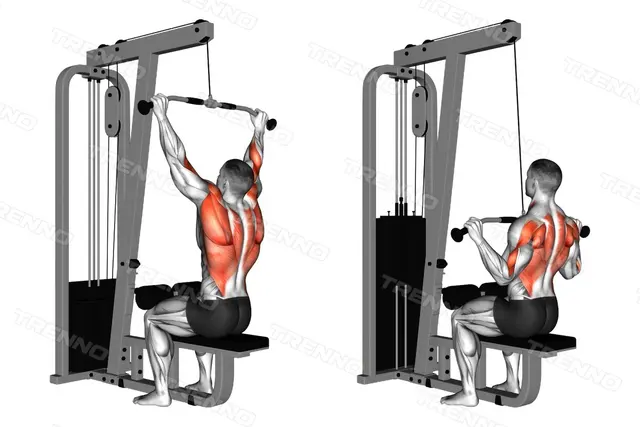
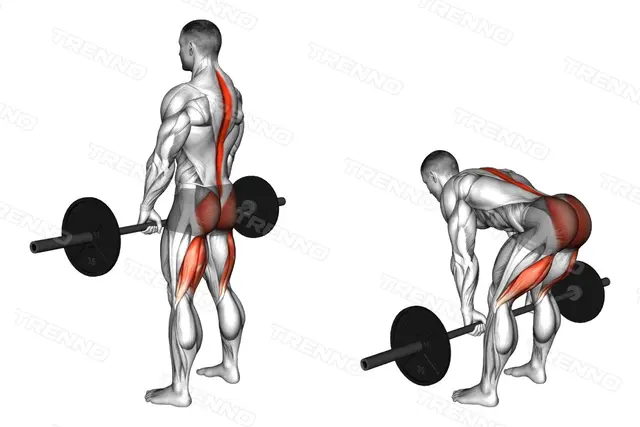
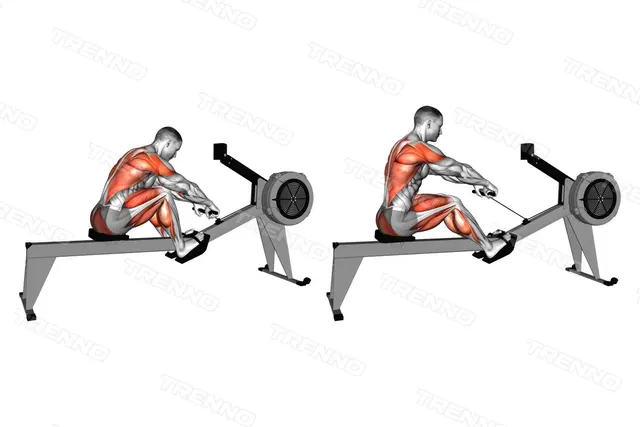
| Monday | Strength and Cardio A | Barbell Back Squat, Barbell Bench Press, Lat Pulldown, Romanian Deadlift | Rowing Erg, 10 minutes |
| Tuesday | Rest, a walk | ||
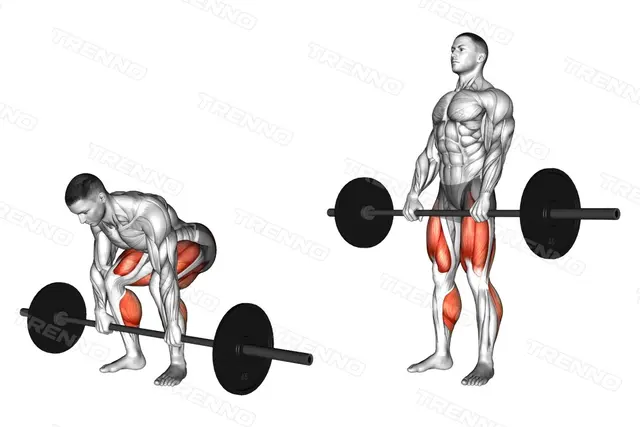
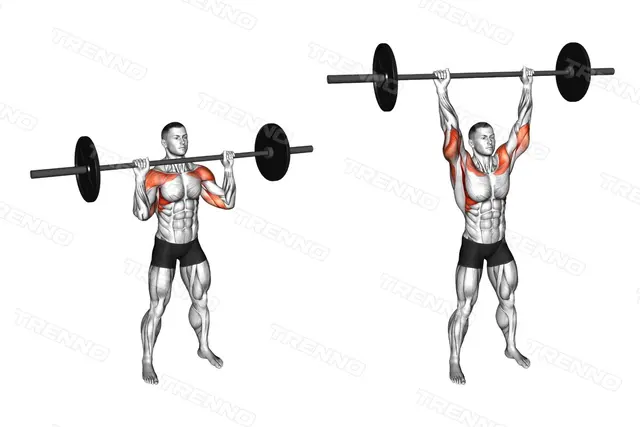
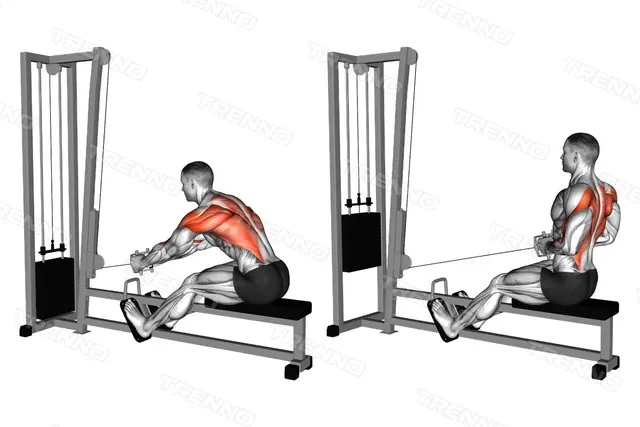
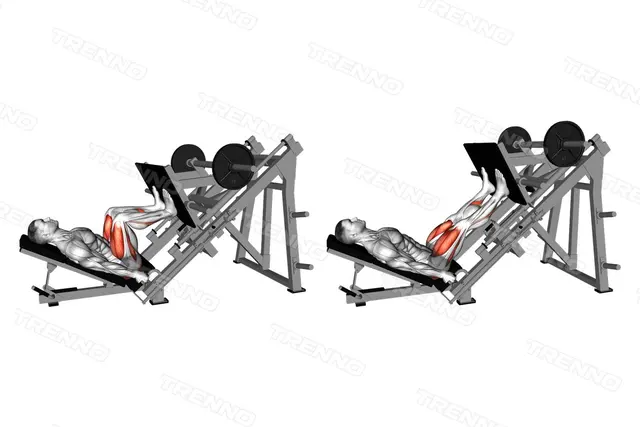
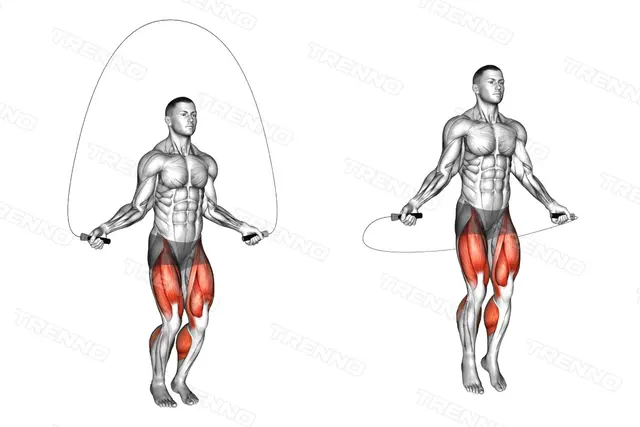
| Wednesday | Strength and Cardio B | Deadlift, Standing Barbell Overhead Press, Seated Cable Row, Leg Press | Jump Rope, 3 rounds of 2 minutes |
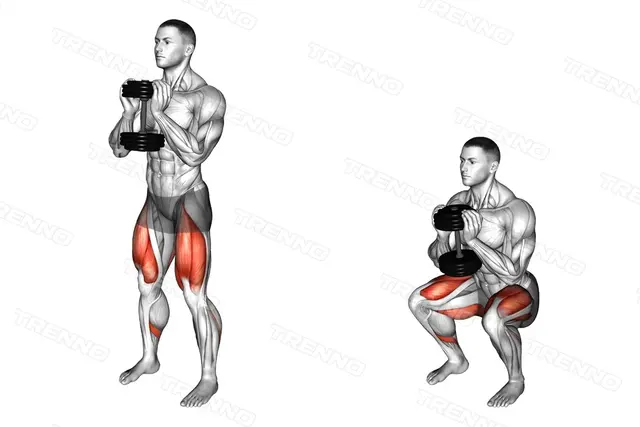
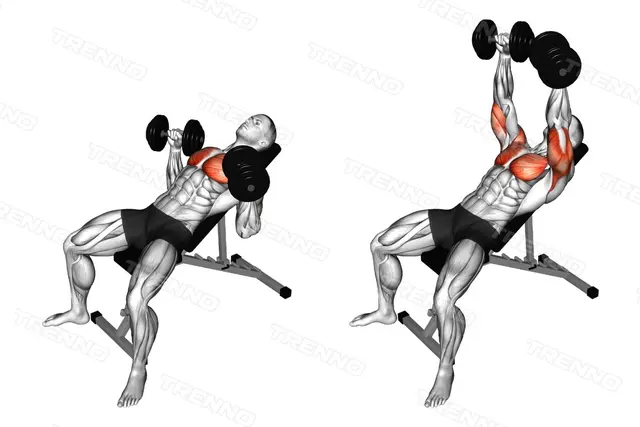
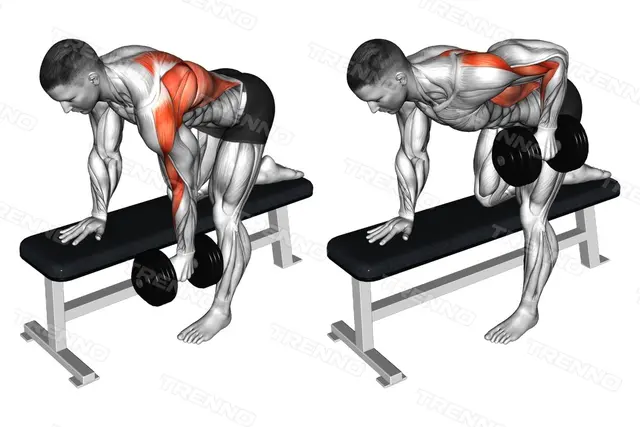
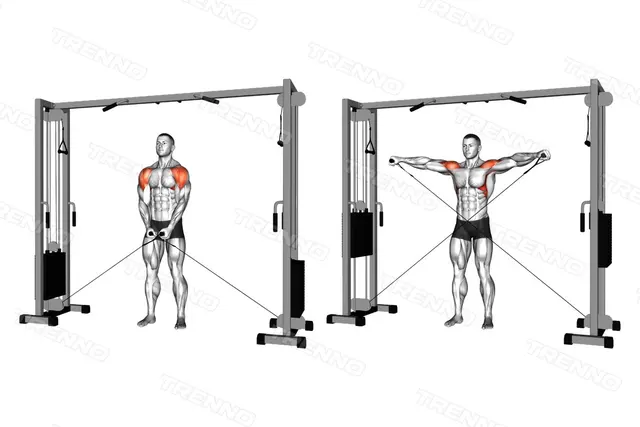
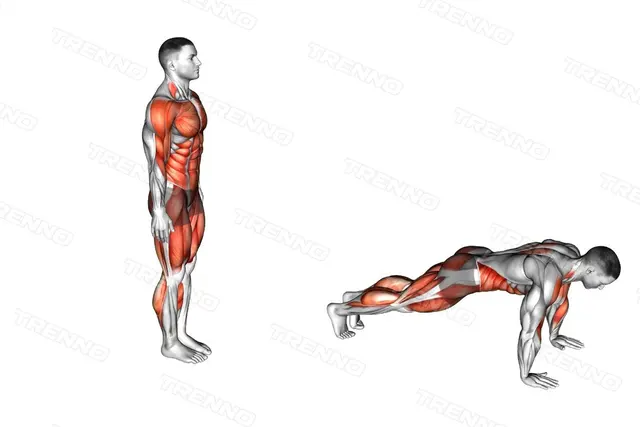
| Thursday | Strength and Cardio C | Goblet Squat, Incline Dumbbell Bench Press, One-Arm Dumbbell Row, Cable Lateral Raise | Burpee, 3 sets of 8 to 12 |
| Friday | Rest, a walk | ||
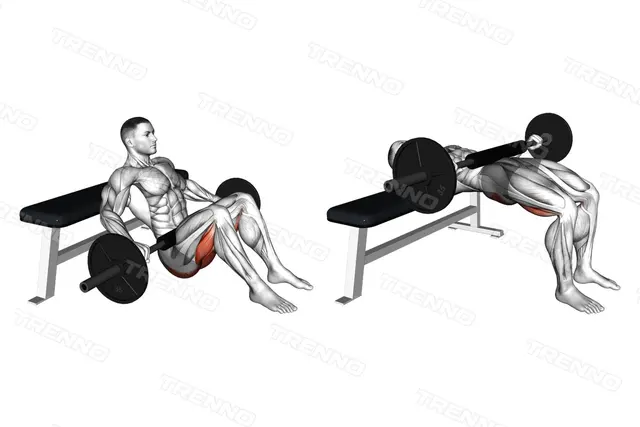
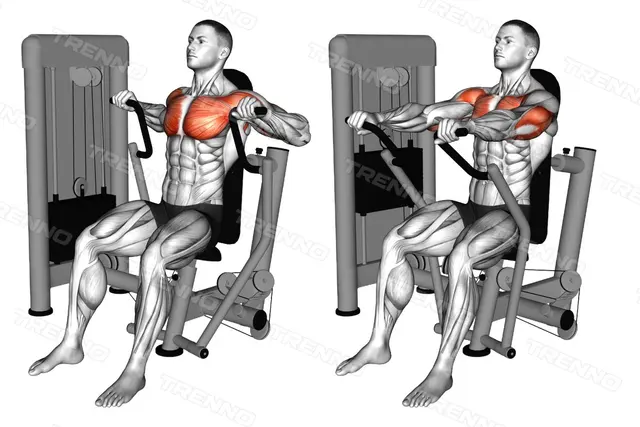
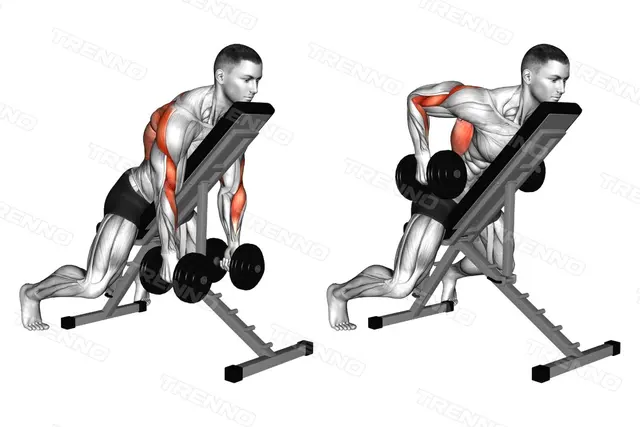
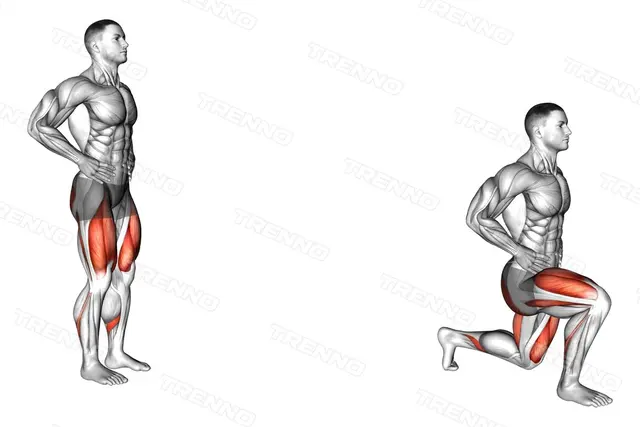
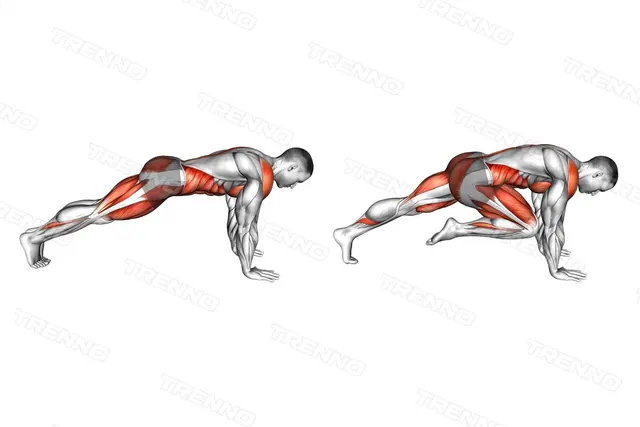
| Saturday | Strength and Cardio D | Barbell Hip Thrust, Machine Chest Press, Chest-Supported Dumbbell Row, Walking Lunge | Mountain Climbers, 3 sets of 40 seconds |
| Sunday | Rest, a walk |
A and B are the heavy barbell days, so they get a rest day between them; C trains with dumbbells and cables the day after B, and D moves the heavy work to the hip thrust, with a machine press and a supported row. Every session trains the legs, a press and a pull. Counted by the body part each exercise is filed under in our exercise library, a one-sided exercise counted once:
| Body part | Sets a week |
|---|---|
| Back | 12 |
| Quadriceps | 9 |
| Chest | 9 |
| Glutes | 9 |
| Shoulders | 6 |
| Hamstrings | 3 |
That is 48 strength sets a week, plus the ten sets of the finishers.
The finishers
| Day | Finisher | Work | With its rests |
|---|---|---|---|
| A | Rowing Erg | 10 minutes, one piece | about 11 minutes |
| B | Jump Rope | 3 rounds of 2 minutes | about 9 minutes |
| C | Burpee | 3 sets of 8 to 12 | about 5 minutes |
| D | Mountain Climbers | 3 sets of 40 seconds | about 5 minutes |
About 20 minutes of hard work a week. They come last because the lifting matters more: a meta-analysis of 43 studies found that adding aerobic training did not compromise muscle growth or maximal strength, though explosive strength gained less, most of all when both were done in the same session (Schumann and colleagues, 2022). Hard intervals are not a weaker kind of cardio either: in 13 trials, interval training and steady training reduced fat mass about equally, and the intervals took about 40 percent less time (Wewege and colleagues, 2017).
Walking, the other half
For weight loss, the American College of Sports Medicine found that 150 to 250 minutes a week of moderate activity brought only modest weight loss, and more than 250 minutes was associated with larger losses (Donnelly and colleagues, 2009). The finishers are nowhere near that. Walking is the easiest way to add those minutes: on the three rest days and after a session, at a pace that leaves you fresh for the next one. The WHO recommends 150 to 300 minutes a week of moderate aerobic activity for every adult’s health anyway.
Sets, reps, rest and effort
- The heavy lifts: 3 sets of 6 to 10 on the squat, the bench press and the overhead press, 5 to 8 on the deadlift and 8 to 12 on the hip thrust, after 1 or 2 warm-up sets, with 2:30 of rest (3:00 after the deadlift).
- The rest: 3 sets of 8 to 12, 10 to 15 or 12 to 20 with 1:30 of rest, the lateral raise with 1:00.
Keep the sets hard and the weights where they were. Dropping to light, easy sets “to tone” removes the very thing that keeps the muscle. End the heavy sets with 1 to 3 reps in reserve. On a flat day in a deficit, hold the weight and let the reps come back.
How to progress
Strength can keep rising while you eat less, so run double progression as usual, explained in our progressive overload guide: keep the weight until every set reaches the top of the range, then add the smallest step. The Barbell Bench Press on Monday, 3 sets of 6 to 10:
| Week | Weight | Reps per set | Next week |
|---|---|---|---|
| 1 | 60 kg (about 130 lb) | 9, 8, 7 | same weight |
| 2 | 60 kg | 10, 9, 8 | same weight |
| 3 | 60 kg | 10, 9, 9 | same weight |
| 4 | 60 kg | 10, 10, 10 | add 2.5 kg |
If progress slows as the weeks of eating less add up, holding your weights while the scale goes down is still a good result.
Circuits instead of sets
The two cards above run each session as rounds, with the rest after the round instead of after every set:
| Program | Where | A session | What it is |
|---|---|---|---|
| Full-Body Conditioning Circuit, 3 days | Gym | 26 to 30 minutes | Four exercises as one round, rest after the round |
| Home HIIT, No Equipment, 3 days | Home | about 22 minutes | Five bodyweight stations as one round, no equipment |
With a single kettlebell, the kettlebell workout plan includes Kettlebell Conditioning, 3 days.
How long a session takes
Counted at about 40 seconds a working set, the rest the plan prescribes, a minute per warm-up set, the finisher and 5 minutes to move between stations: A and B take about 50 minutes, C about 38 and D about 40.
Common mistakes
- Going light “to tone”. The heavy sets are what keeps the muscle.
- Only cardio. It moves the scale, but in the 8-month trial the lifting groups added more lean mass.
- A crash diet. A deficit of about 500 kcal a day was enough to stop lean mass gains in the meta-analysis above.
- Letting the finisher eat the lifting. It comes last and runs at a pace you can hold.
- Judging by one morning on the scale. Look at the trend over weeks.
FAQ
Is lifting or cardio better for fat loss?
For the scale, cardio; for the lean mass, lifting. Together they did both in the 8-month trial. This plan puts the lifting first, adds short cardio, and leaves the rest to walking.
How much weight will I lose?
Nobody can say from a training plan: the result depends on what you eat as much as on how you train, and training alone brings modest losses unless there is a lot of it.
Why is the cardio after the lifting?
So the heavy sets get you fresh. In the meta-analysis above, adding cardio cost no muscle growth or maximal strength; only explosive strength gained less, mostly when both were done in one session.
Can I lose fat and build muscle at the same time?
On average, lean mass gains shrink in a deficit, and a deficit of about 500 kcal a day was enough to stop them in the meta-analysis above. Strength kept rising.
Do I need HIIT?
No. Intervals and steady cardio reduced fat mass about equally in the trials above; intervals take less time.
Sources
- Sardeli AV, Komatsu TR, Mori MA, Gáspari AF, Chacon-Mikahil MPT. Resistance training prevents muscle loss induced by caloric restriction in obese elderly individuals: a systematic review and meta-analysis. Nutrients, 2018.
- Murphy C, Koehler K. Energy deficiency impairs resistance training gains in lean mass but not strength: a meta-analysis and meta-regression. Scandinavian Journal of Medicine and Science in Sports, 2022.
- Donnelly JE, Blair SN, Jakicic JM, Manore MM, Rankin JW, Smith BK; American College of Sports Medicine. Appropriate physical activity intervention strategies for weight loss and prevention of weight regain for adults. Medicine and Science in Sports and Exercise, 2009.
- Willis LH and colleagues. Effects of aerobic and/or resistance training on body mass and fat mass in overweight or obese adults. Journal of Applied Physiology, 2012.
- Schumann M and colleagues. Compatibility of concurrent aerobic and strength training for skeletal muscle size and function: an updated systematic review and meta-analysis. Sports Medicine, 2022.
- Wewege M, van den Berg R, Ward RE, Keech A. The effects of high-intensity interval training vs. moderate-intensity continuous training on body composition in overweight and obese adults: a systematic review and meta-analysis. Obesity Reviews, 2017.
- Bull FC and colleagues. World Health Organization 2020 guidelines on physical activity and sedentary behaviour. British Journal of Sports Medicine, 2020.
All three programs are in Trenno’s Explore with their days, sets and rest times. The previous session’s sets show beside the empty ones, so you see whether the weights are holding while the scale moves, and the rest timer starts when you tick a set.