
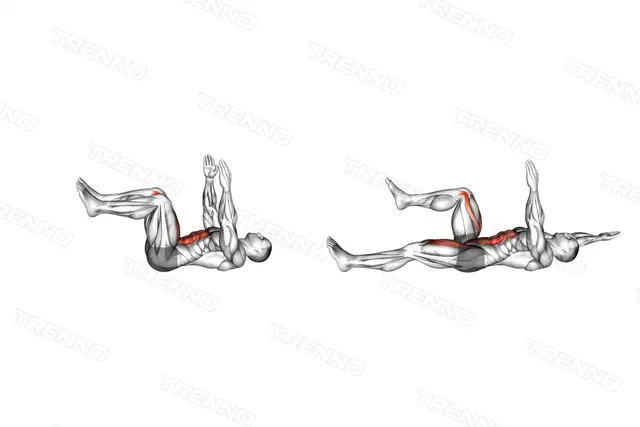

Who this plan is for
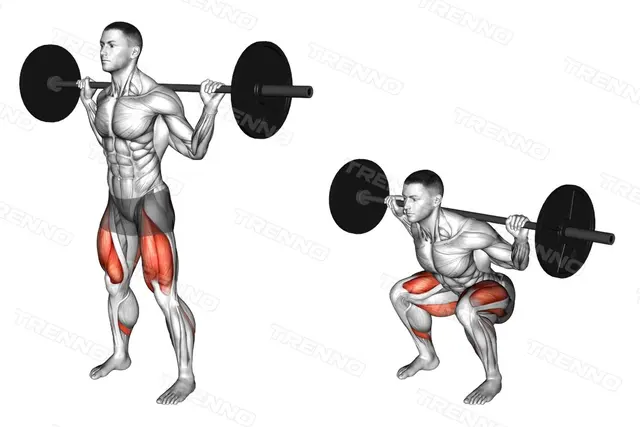
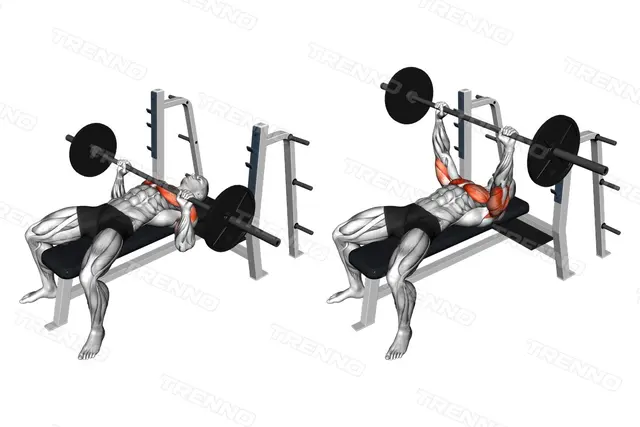
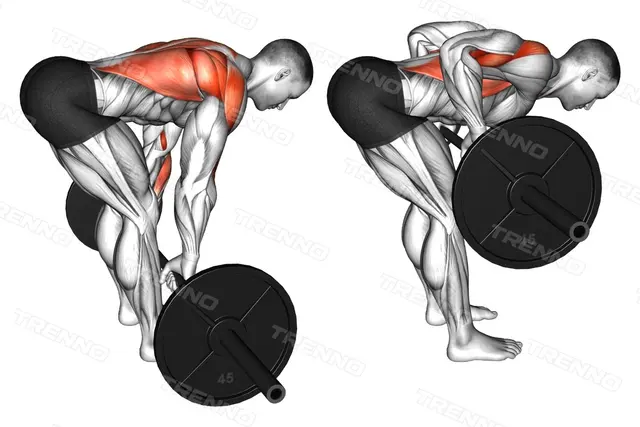
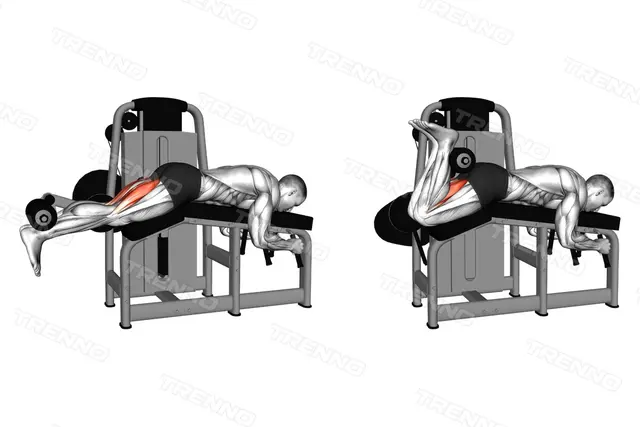
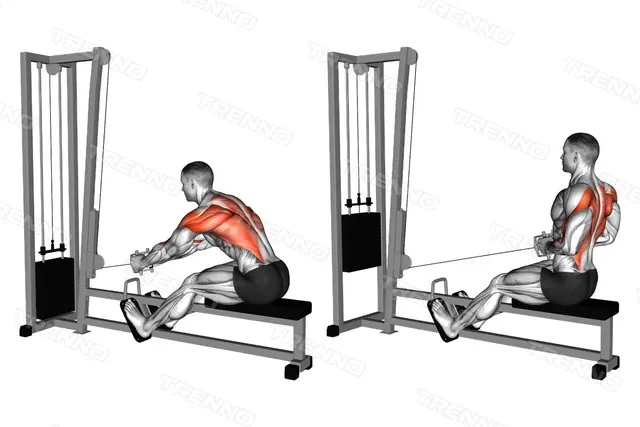
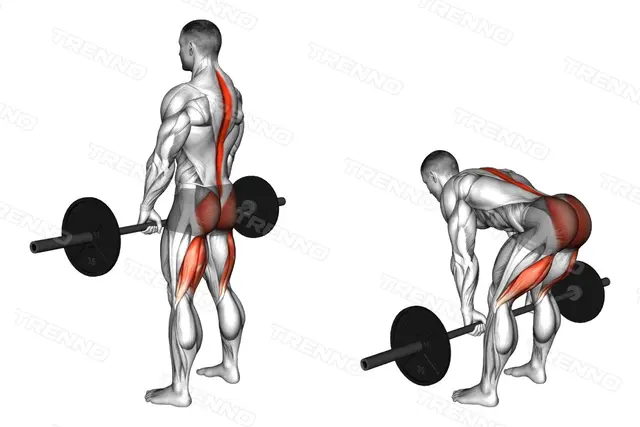
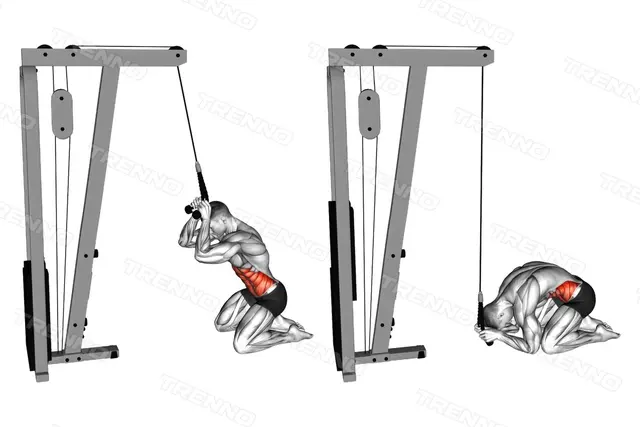
This is the plan for your first months of lifting: never trained, or back after years away. Three sessions a week leave a rest day between them and fit around a working week. The plan above is the barbell version for a full gym; three more versions of the same idea follow it, so one of them fits wherever you train:
| Version | Where | You need | A session |
|---|---|---|---|
| Beginner Full-Body Barbell | A gym | A barbell, a squat rack, a bench, cables and a few machines | about 45 minutes |
| Beginner Full-Body Dumbbells | Home or gym | Dumbbells and a sturdy chair | about 40 minutes |
| Beginner Full-Body Machines | A gym | Machines and cables, no free weights | about 35 minutes |
| Beginner Full-Body Bodyweight | Home | A bar or a sturdy table to row from, a chair, a step | about 35 minutes |
The machine version is the easiest start if barbells are new to you, because a machine guides the movement; the machine workout plan goes through it in detail. If you can train only two days, the 2-day workout plan covers the body twice a week.
Why full body, not a body-part split
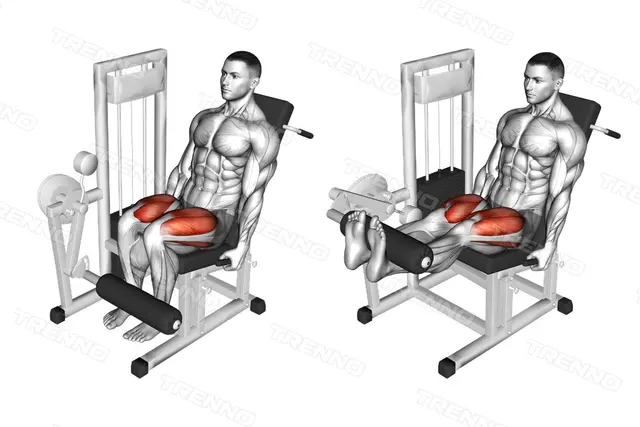
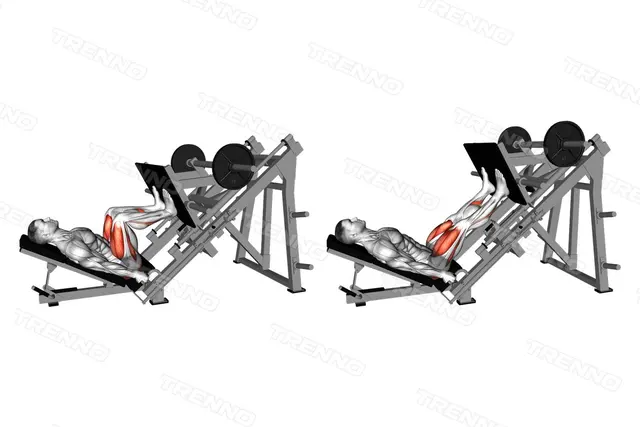
A beginner gets stronger mostly by learning the movements, and a movement is learned by repeating it. Every day of this plan trains the whole body: the legs, a press, a pull and the core. The patterns come back several times a week in close variations; in the barbell version the fronts of the thighs are trained by the squat, the leg extension and the leg press on three different days.
Most muscles are trained on all three days. An early meta-analysis found that, with the weekly work equal, training a muscle twice a week grew more than training it once (Schoenfeld and colleagues, 2016); a later one of 25 studies found the weekly sets matter more than the days (Schoenfeld and colleagues, 2019), so for a beginner the real gain is the practice. Body-part splits suit lifters who need many sets per muscle; in the first months they mostly add days without adding results.
How the week works
| Day | Session |
|---|---|
| Monday | Day 1 |
| Tuesday | Rest |
| Wednesday | Day 2 |
| Thursday | Rest |
| Friday | Day 3 |
| Saturday and Sunday | Rest |
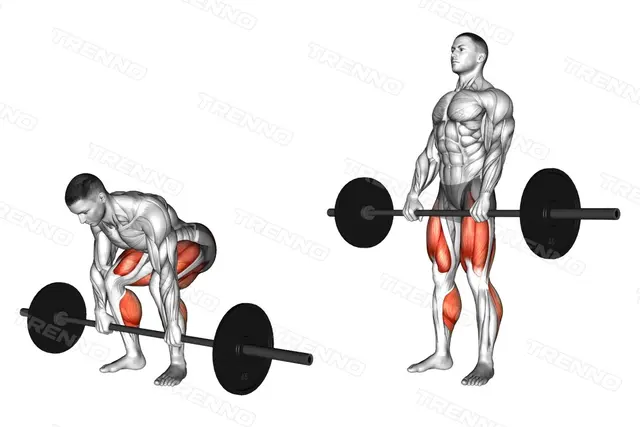
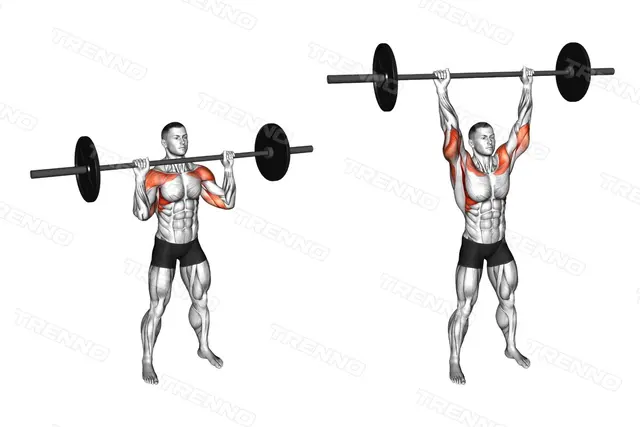
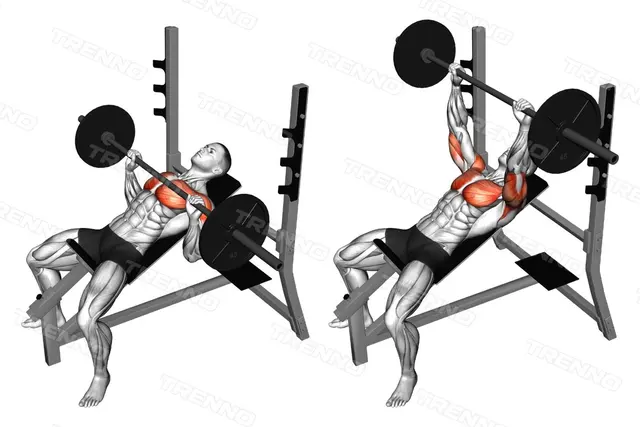
Train on alternate days and keep the order. In the barbell version the three days are three different workouts: Day 1 opens with the Barbell Back Squat and the Barbell Bench Press, Day 2 with the Deadlift and the Standing Barbell Overhead Press, Day 3 with the Leg Press and the Incline Barbell Bench Press. A missed day is simply done next time; the order matters more than the weekday.
The American College of Sports Medicine recommends 2 to 3 training days a week for novices, and the WHO recommends muscle strengthening of all major muscle groups on 2 or more days a week for every adult. Three days meets both.
Sets, reps, rest and effort
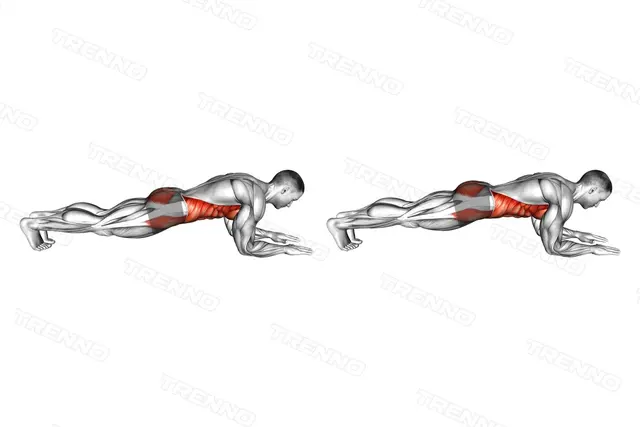
Every exercise gets 3 sets. In the barbell version the main lifts run 6 to 10 reps (the Deadlift 5 to 8) after 1 or 2 warm-up sets, with 2:30 of rest, 3:00 after the deadlift. The other exercises run 8 to 12, 10 to 15 or 12 to 15 reps, most of them with 1:00 to 1:30 of rest, and the Plank is held for 40 seconds.
Effort for a beginner: end every set with 2 or 3 reps you could still do cleanly. That is hard enough to make progress and leaves room to learn. Warm-up sets are light sets that climb toward the working weight; they do not count as work.
The first two weeks
- Week 1: find the weights. Start lighter than you think. Do the first working set, count how many clean reps you had left, and adjust the next set up or down. Write the weight down.
- Week 2: start the progression. Use the weights that left 2 or 3 reps in reserve, and try to add a rep somewhere in every exercise.
Lower the weight under control and stop a set when the form changes. Filming one set of the squat and one of the deadlift on your phone shows more than any mirror.
How to progress
Use double progression: each exercise has a rep range. Keep the weight until you reach the top of the range on all three sets, then add the smallest step the gym has and start again from the bottom of the range. On a barbell that is 2.5 kg (5 lb in a gym that loads pounds); on dumbbells it is usually 2 kg or 5 lb per hand. Our progressive overload guide has the whole method. The Barbell Back Squat in the first six weeks, 3 sets of 6 to 10:
| Week | Weight | Reps per set | Next session |
|---|---|---|---|
| 1 | 40 kg (about 90 lb) | 8, 8, 8 | same weight |
| 2 | 40 kg | 10, 10, 9 | same weight |
| 3 | 40 kg | 10, 10, 10 | add 2.5 kg |
| 4 | 42.5 kg | 9, 9, 8 | same weight |
| 5 | 42.5 kg | 10, 10, 10 | add 2.5 kg |
| 6 | 45 kg | 9, 8, 8 | same weight |
Early on the weight goes up often; later it slows, and that is the sign the plan is doing its work. The American College of Sports Medicine’s rule is the same idea: add 2 to 10 percent once you can do one or two reps more than the target. In the bodyweight version you move to a harder variation instead of adding weight.
What to write down
The log is the plan’s engine. After every set, record the exercise, the weight and the reps. Mark the warm-up sets so they do not count as records. Add a note when something was off: a sore shoulder, a bad night, a new bar. In a month you will see which lifts moved and which stalled, and the stalled ones tell you where to look. How to keep a workout log goes further.
In Trenno, all four versions are in Explore with their days, sets and rest times. The previous session’s sets show beside the empty ones, so “same weight or more?” takes a second, and the rest timer starts when you tick a set.
Substitutions
| Instead of | If | Do |
|---|---|---|
| Barbell Back Squat | No squat rack is free | Goblet Squat |
| Barbell Bench Press | No bench is free | Dumbbell Floor Press |
| Deadlift | Pulling from the floor is uncomfortable | Trap Bar Deadlift |
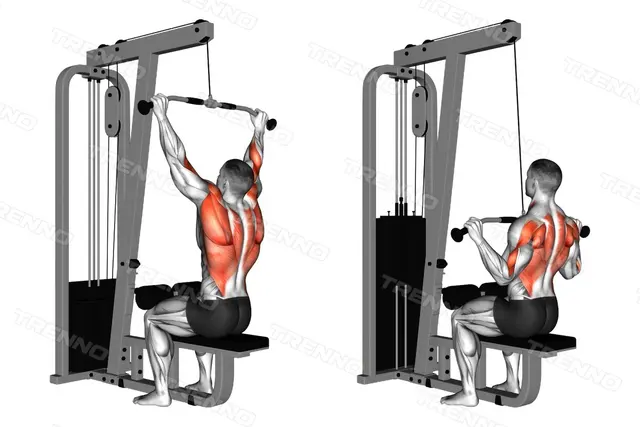
| Lat Pulldown | The station is busy | Pull-Up (Assisted) |
| Lying Leg Curl | There is no machine | Romanian Deadlift |
Keep the sets, the reps and the rest of the exercise you replace.
Common mistakes
- Adding exercises. Five a day is enough. When a workout feels easy, add weight, not movements.
- Chasing soreness. Not being sore does not mean the session was wasted.
- Skipping the log. “I will remember” fails by Friday.
- Changing the plan every week. Give it the full 12 weeks before judging it.
After 12 weeks
The plan is written for 12 weeks. When it ends, or when most lifts stop moving for two or three weeks in a row and sleep and food explain nothing, move on:
- Four days a week: a four-day upper/lower split trains every muscle twice.
- Still three days: the push pull legs split, or Intermediate Full-Body Barbell, 3 days for more strength work.
Until then, three days a week is not a compromise. It is the plan.
FAQ
Is a full-body workout three times a week enough to build muscle?
For a beginner, yes: most muscles are trained on all three days, and the plan adds weight whenever the reps allow.
How much weight should I start with?
A weight you can lift for the bottom of the rep range with 2 or 3 reps to spare. The first week is for finding it, set by set.
Can I do this plan at home?
Yes. The dumbbell version needs dumbbells and a sturdy chair, and the bodyweight version needs no weights at all. The dumbbell workout plan and the bodyweight workout plan cover both in more depth.
Should I add cardio?
It helps your health: the WHO recommends 150 to 300 minutes of moderate aerobic activity a week for adults. Walk, cycle or swim on the rest days, or after lifting.
Sources
- American College of Sports Medicine. Progression models in resistance training for healthy adults. Medicine and Science in Sports and Exercise, 2009.
- Bull FC and colleagues. World Health Organization 2020 guidelines on physical activity and sedentary behaviour. British Journal of Sports Medicine, 2020.
- Schoenfeld BJ, Ogborn D, Krieger JW. Effects of resistance training frequency on measures of muscle hypertrophy: a systematic review and meta-analysis. Sports Medicine, 2016.
- Schoenfeld BJ, Grgic J, Krieger J. How many times per week should a muscle be trained to maximize muscle hypertrophy? Journal of Sports Sciences, 2019.