
Who this plan is for
Dumbbells are the gym that fits in a corner of a room. The plan above, Beginner Full-Body Dumbbells, 3 days, is for your first months of lifting at home or in a small gym: three full-body sessions a week with nothing but dumbbells and a sturdy chair. The second card, Intermediate Upper/Lower Dumbbell, 4 days, is for lifters with six months or more behind them and adds an adjustable bench and a pull-up bar.
Choose something else if:
- You are a beginner with a full gym. A barbell goes up in smaller steps than dumbbells, which makes the first months easier: take the barbell version of the 3-day full-body plan.
- You have four days and a full gym. The upper/lower split with barbells and machines trains the same week with heavier main lifts.
- You have no weights at all. The bodyweight workout plan needs a table, a chair and a step.
What you need
| Plan | Dumbbells | Plus |
|---|---|---|
| Full body, 3 days | A light, a medium and a heavy pair, or one adjustable pair | A sturdy chair |
| Upper/lower, 4 days | The same, going heavier over the weeks | An adjustable bench and a pull-up bar |
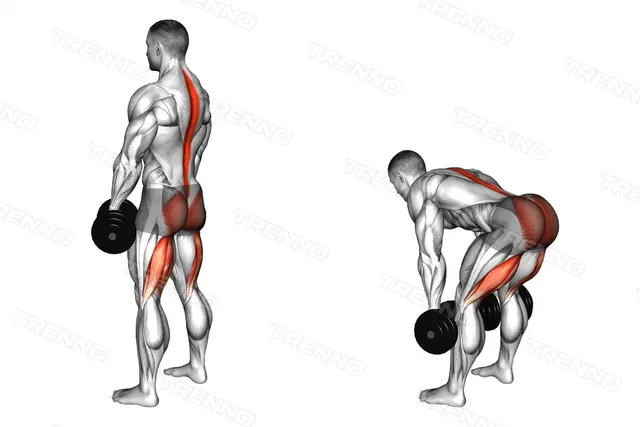
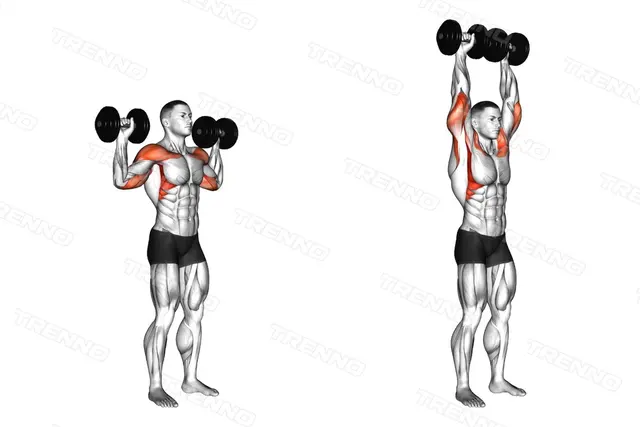
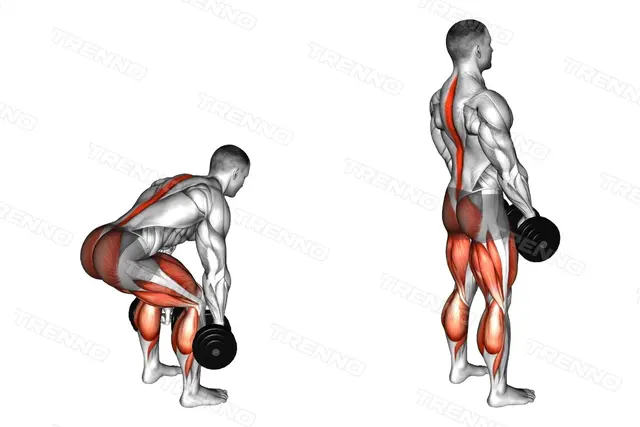
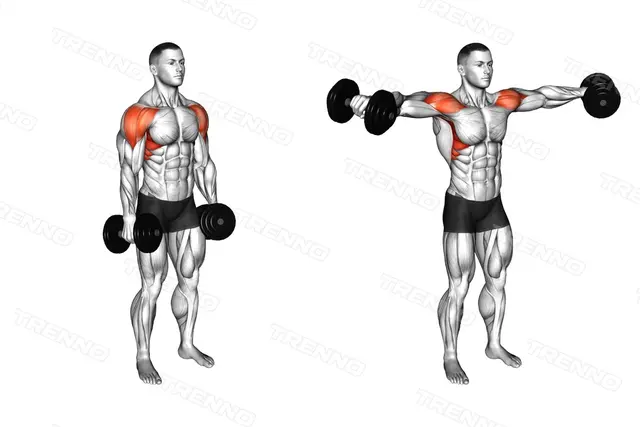
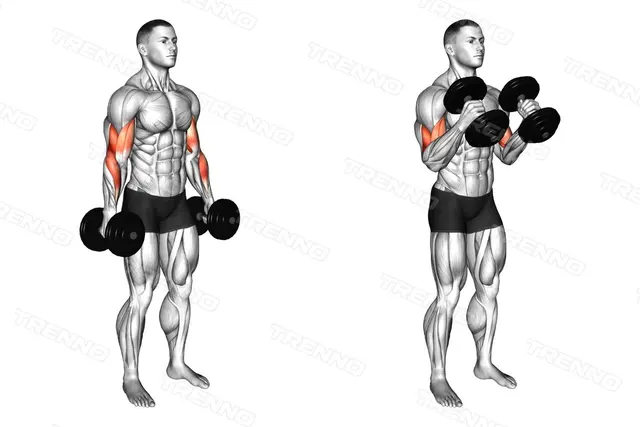
The lateral raise and the curls take the lightest pair, the presses and rows a medium one, the squats and the Romanian deadlifts the heaviest. Adjustable dumbbells, one pair that changes weight, cover all three in the space of one. Look at the size of the step before you buy: it decides how you will progress.
How the week works
| Day | 3 days | 4 days |
|---|---|---|
| Monday | Dumbbell Full Body A | Upper Body A |
| Tuesday | Rest | Lower Body A |
| Wednesday | Dumbbell Full Body B | Rest |
| Thursday | Rest | Upper Body B |
| Friday | Dumbbell Full Body C | Lower Body B |
| Saturday and Sunday | Rest | Rest |
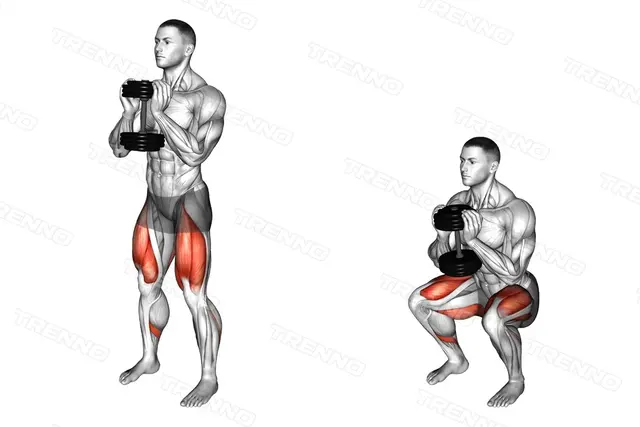
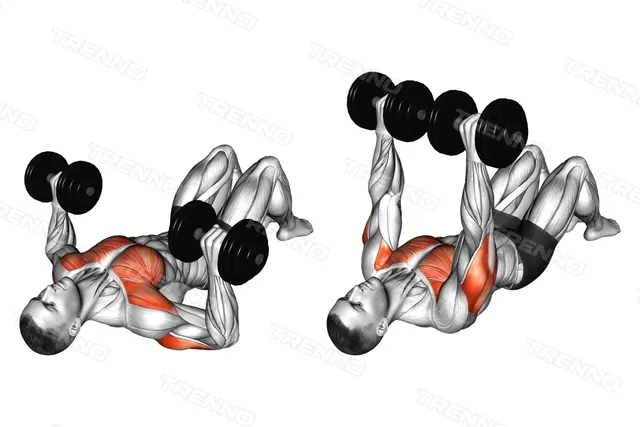
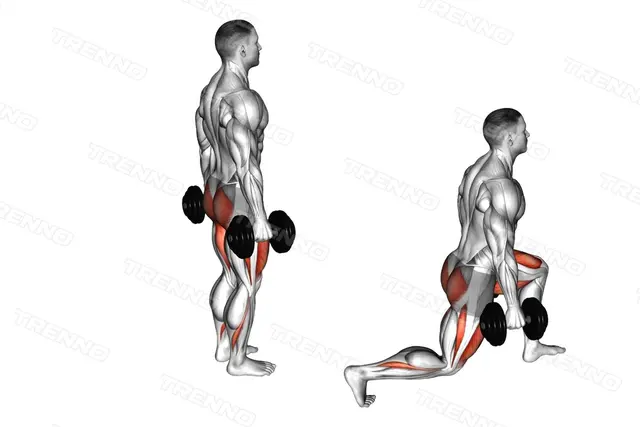
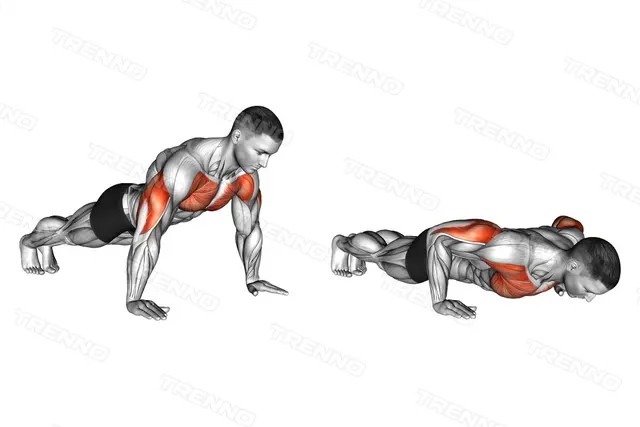
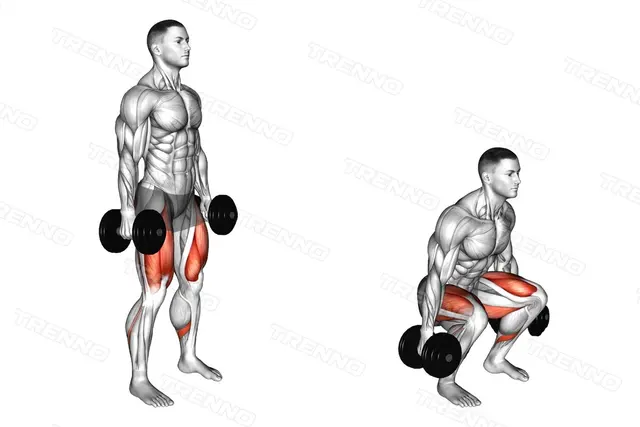
The three-day plan trains the whole body every session through different exercises: the Goblet Squat, the Dumbbell Reverse Lunge and the Dumbbell Squat take the legs on the three days, the Dumbbell Floor Press and the Push-Up the chest. The four-day plan trains each half twice: two upper days that press and pull at different angles, a squat day and a hinge day for the legs.
Sets, reps, rest and effort
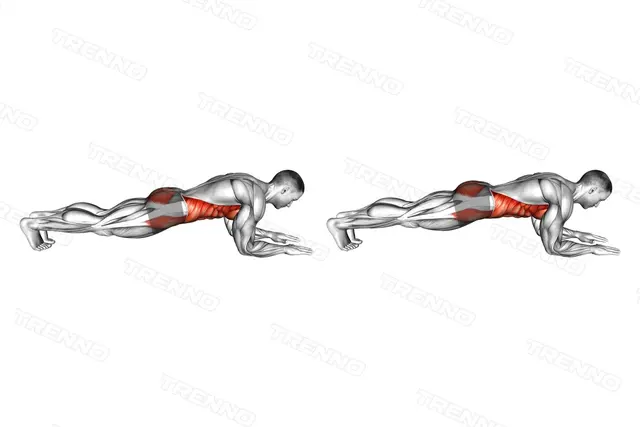
The three-day plan uses 2 or 3 sets per exercise, most of them 8 to 12 reps with 1:30 of rest and 1:00 on the small exercises; the Plank is held for 30 seconds. The four-day plan opens each day with 4 sets of 6 to 10 or 8 to 12 after 2 warm-up sets, and rests 1:30 after every set.
End each set with 1 to 3 reps you could still do cleanly, and 2 or 3 in the first weeks while you learn the movements. With light dumbbells that often means more reps before a set gets hard, which is fine: muscle grows across a wide range of loads when the sets are hard (Schoenfeld and colleagues, 2017).
Your starting weight
There is no formula that knows your body. Find the weight set by set in the first week:
- Pick a pair you can surely lift for the bottom of the range.
- Do the first set and count the reps you had left.
- More than 3 left: take the next pair for the second set. None left before the bottom of the range: go down one.
- Write down the pair that left 2 or 3 reps. That is where week 2 starts.
How to progress when the next pair is a big jump
Dumbbells rise in steps of about 2 kg or 5 lb per hand, and on a light dumbbell that is a big jump: from 10 kg to 12 kg is 20 percent. The American College of Sports Medicine’s guide for adding load is 2 to 10 percent once you pass the target by one or two reps. So stretch the range before you move up, as our progressive overload guide explains: let an 8 to 12 exercise climb to 15 on every set, then take the next pair and start again from the bottom.
The Goblet Squat, 3 sets, with the top of the range stretched to 15:
| Week | Dumbbell | Reps per set | Next session |
|---|---|---|---|
| 1 | 16 kg (about 35 lb) | 12, 11, 10 | same weight |
| 2 | 16 kg | 13, 12, 12 | same weight |
| 3 | 16 kg | 15, 14, 13 | same weight |
| 4 | 16 kg | 15, 15, 15 | the next dumbbell |
| 5 | 18 kg | 10, 10, 9 | same weight |
| 6 | 18 kg | 12, 11, 10 | same weight |
When even that does not bridge the gap, make the same weight harder before you move up:
- Slow the lowering to 3 seconds.
- Pause for a second at the bottom of each rep.
- Add a set, up to one more per exercise.
- Go one-sided: a split squat instead of a squat puts most of the load on one leg.
Without a bench or a bar
| Instead of | If | Do |
|---|---|---|
| Dumbbell Bench Press | No bench | Dumbbell Floor Press |
| Incline Dumbbell Bench Press | No adjustable bench | Decline Push-Up |
| Bulgarian Split Squat | Nothing to rest the back foot on | Dumbbell Split Squat |
| Pull-Up | No pull-up bar | Dumbbell Pullover |
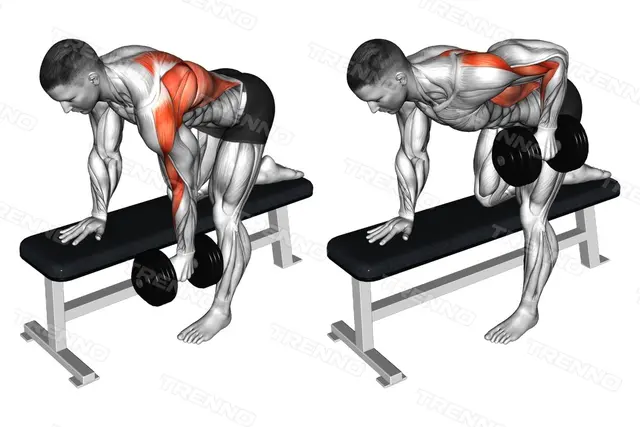
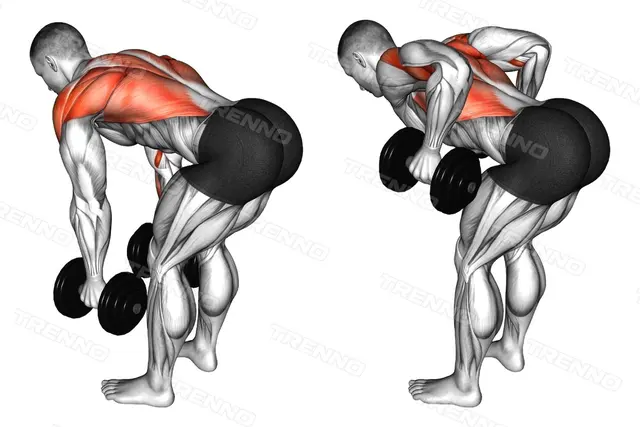
| Chin-Up | No pull-up bar | Bent-Over Dumbbell Row |
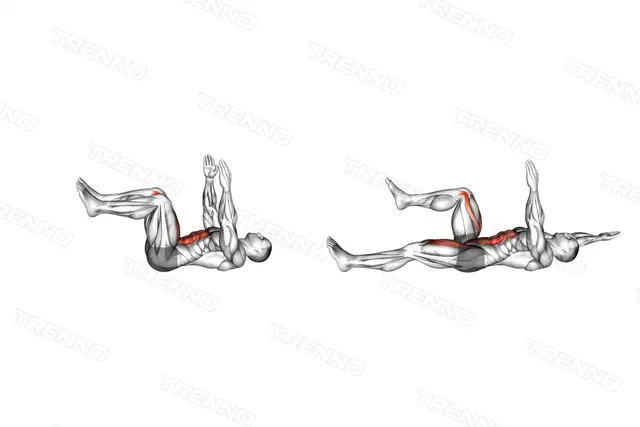
| Hanging Leg Raise | No pull-up bar | Dead Bug |
The floor press stops the elbows at the floor, so the range is shorter than on a bench, and it needs no spotter: if a rep fails, the dumbbells rest on the floor beside you.
Shorter dumbbell sessions in Trenno
For days when a full program does not fit, Explore in Trenno has single dumbbell routines: “Quick Dumbbell Full-Body, 30 min”, “One-Pair Dumbbell Full-Body” for a single pair of dumbbells, “Dumbbell Upper Body” and “Dumbbell Lower Body”, and “Light Dumbbells, Full Body”, which runs higher rep ranges for light pairs. The first is written out, with a shorter superset version, in the 30-minute full-body workout.
How long a session takes
At about 40 seconds a working set, the prescribed rest, a minute per warm-up set and 5 minutes to set up: the three-day plan takes about 40 minutes a session, the four-day plan about 55. Add 5 to 10 minutes of easy warm-up.
Common mistakes
- Owning one light pair for years. The plan stops working when the weight stops rising. Plan the next pair when the current one reaches the top of the range.
- Moving up too early. A 20 percent jump taken before the range is full costs form, and the reps fall apart.
- Going easy on the legs because the dumbbells feel light for them. Use the heaviest pair, one-legged exercises and a slow lowering.
- Short rests on the heavy sets. The 1:30 is part of the plan.
FAQ
Can you build muscle with only dumbbells?
Yes. Muscle grows across a wide range of loads when sets are taken close to failure (Schoenfeld and colleagues, 2017), and the four-day plan gives the big muscle groups 10 to 12 hard sets a week, counted from its rows. What dumbbells limit is the heaviest weight, which matters more for one-rep strength than for size.
How heavy should my dumbbells be?
Heavy enough that you reach the bottom of the range with 2 or 3 reps to spare. Find it in the first week, set by set, as above.
Do I need a bench?
Not for the three-day plan: the chest is trained with the floor press and push-ups, and a chair supports the rows. The four-day plan uses an adjustable bench; without one, use the swaps above.
Three days or four?
Three in your first months, four once the three-day plan has run its 12 weeks and you have the time.
Sources
- Schoenfeld BJ, Grgic J, Ogborn D, Krieger JW. Strength and hypertrophy adaptations between low- vs. high-load resistance training: a systematic review and meta-analysis. Journal of Strength and Conditioning Research, 2017.
- American College of Sports Medicine. Progression models in resistance training for healthy adults. Medicine and Science in Sports and Exercise, 2009.
Both programs are in Trenno’s Explore with their days, sets and rest times. The previous session’s sets show beside the empty ones, which is what tells you the range is full and the next pair is due.