
Who this plan is for
Machines take two jobs off a beginner: balancing the weight and needing someone to spot it. The plan above trains the whole body three times a week on machines and cables, with no bar to unrack and no dumbbell to pick up. It suits your first months of lifting, a return after years away, and anyone who finds the free-weight corner the hardest part of the gym.
Pick another plan if:
- You want to learn the barbell lifts from the start. The barbell version of the 3-day full-body plan builds the week on the squat, the bench press and the deadlift.
- You train at home. The dumbbell workout plan needs dumbbells and a chair, the bodyweight workout plan no weights at all.
- Two days is all you have. The 2-day workout plan is mostly machines too.
How the week works
| Monday | Wednesday | Friday | |
|---|---|---|---|
| Session | Machine Full Body A | Machine Full Body B | Machine Full Body C |
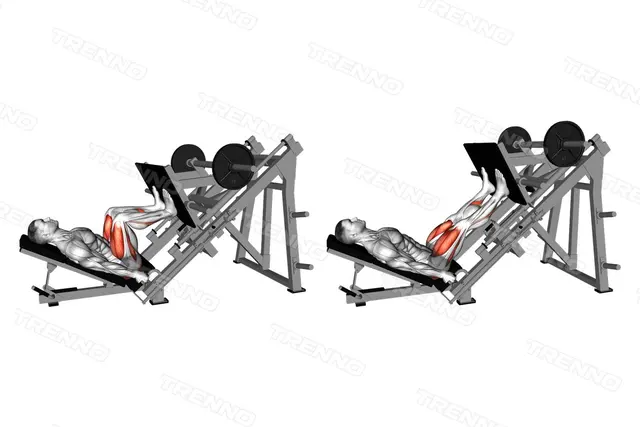
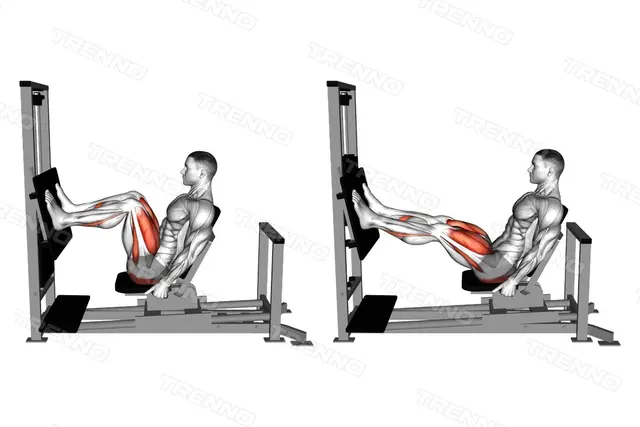
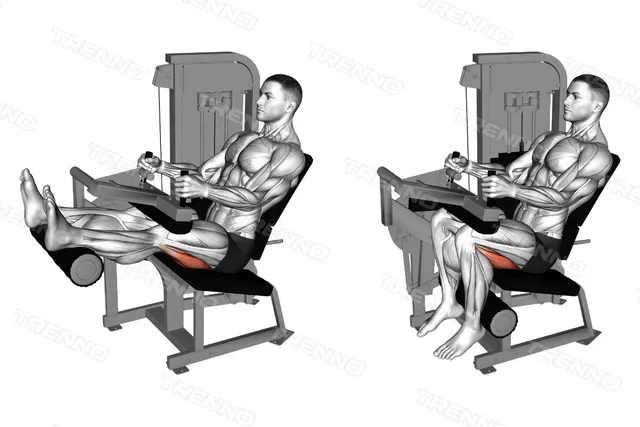
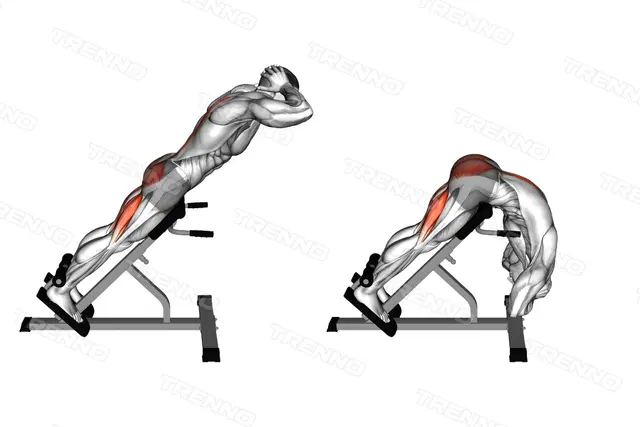
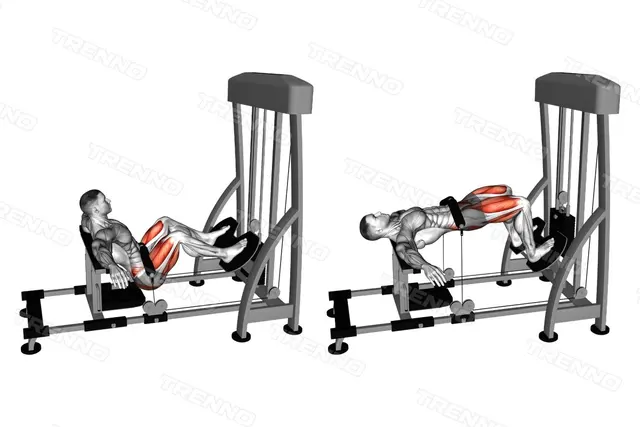
| Legs and hips | Leg Press | Horizontal Leg Press, Seated Leg Curl | Machine Hip Thrust, Back Extension |
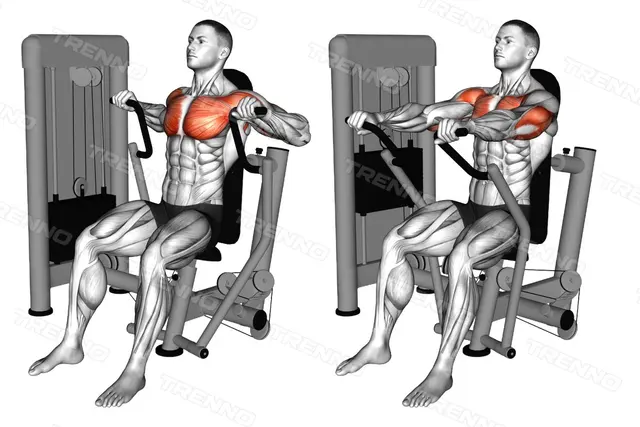
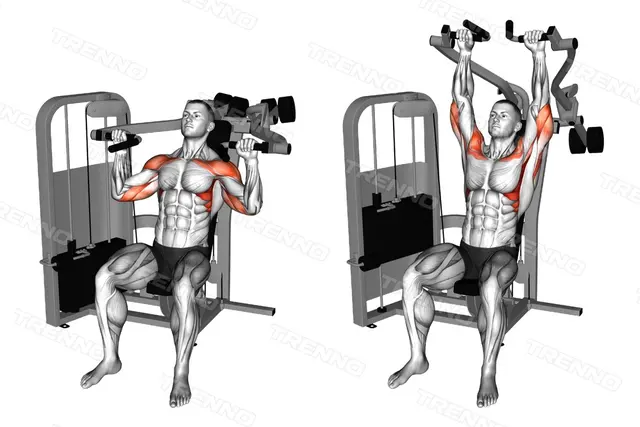
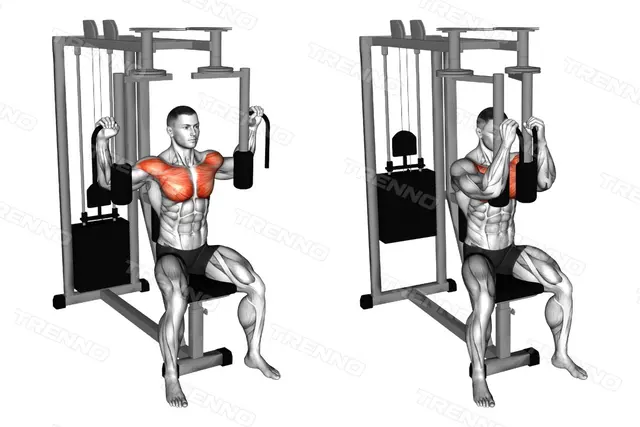
| Push | Machine Chest Press | Machine Shoulder Press | Pec Deck |
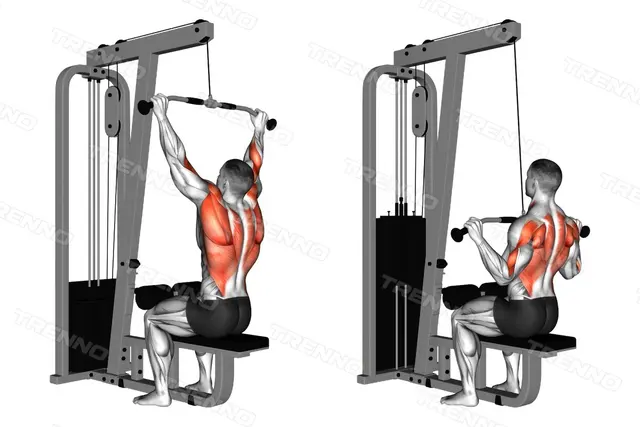
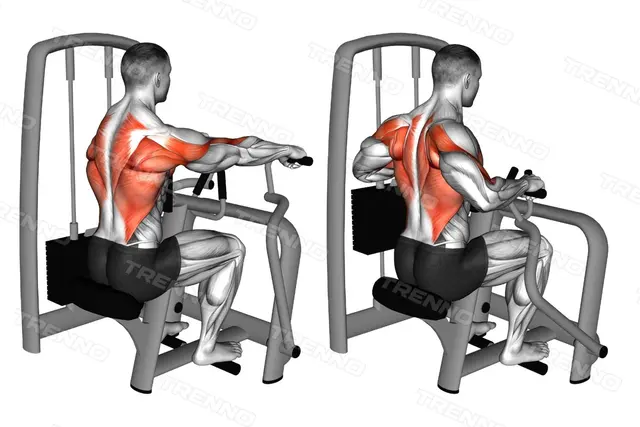
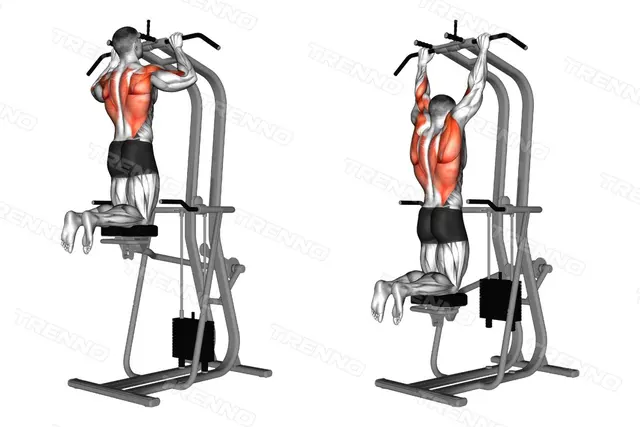
| Pull | Lat Pulldown | Machine Seated Row | Pull-Up (Assisted) |
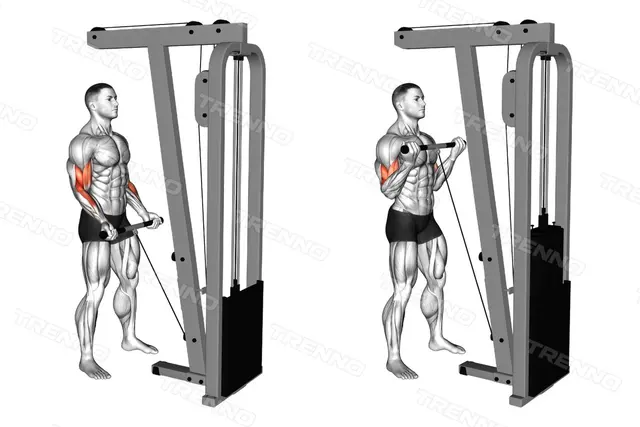
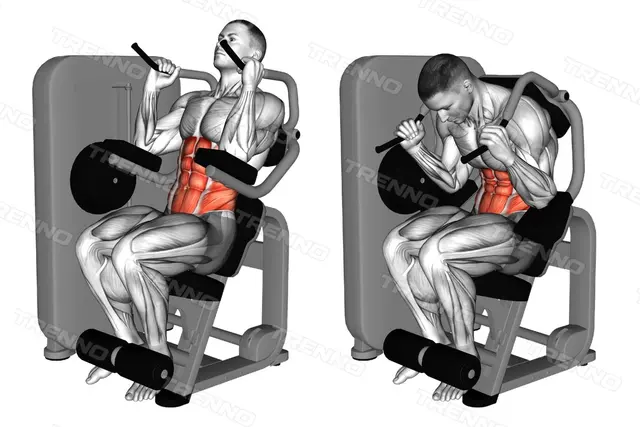
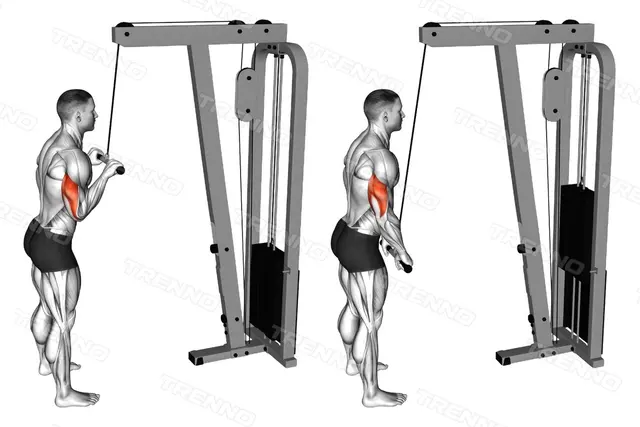
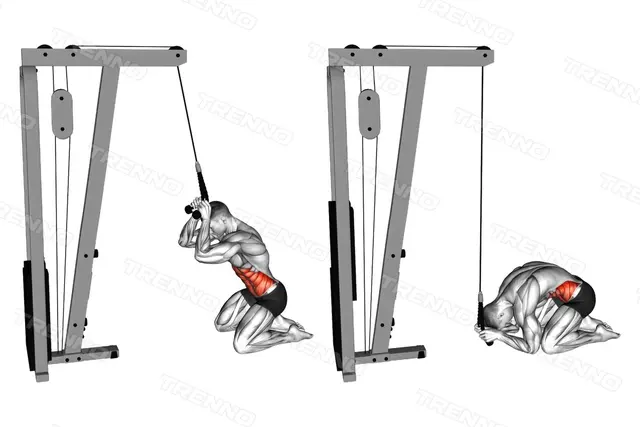
| Arms and abs | Cable Biceps Curl, Machine Crunch | Cable Triceps Pushdown | Cable Crunch |
Tuesday, Thursday and the weekend are rest days. Every session trains the legs, a push and a pull, each day through different machines, so the back is worked on all three days and the chest and the fronts of the thighs on two. Counted by the body part each exercise is filed under in our exercise library:
| Body part | Sets a week | Days |
|---|---|---|
| Back | 12 | Monday, Wednesday, Friday |
| Chest | 6 | Monday, Friday |
| Quadriceps | 6 | Monday, Wednesday |
| Abs | 6 | Monday, Friday |
| Hamstrings, shoulders, glutes | 3 each | One day each |
| Biceps, triceps | 2 each | One day each |
That is 43 working sets a week. The presses also work the shoulders and the triceps, the pulls the biceps, and both leg presses the glutes, so the smaller muscles collect more than their own row shows.
Setting up a machine
The first session goes mostly into settings. On every machine:
- Line the moving joint up with the axis. On machines whose arm swings around a pivot, such as the leg curl, the pec deck and the machine crunch, move the seat or the pad until the knee, the shoulder or the trunk you are bending sits level with the bolt the arm turns around.
- Set where the rep starts. The handles or the pad should be in reach without a stretch, and the stack should lift off as soon as you start to push or pull.
- Start light. Pin a weight you could move 20 times for the first set, then adjust.
- Write the settings down. Seat height, back pad and start position, in the exercise’s note line in Trenno or anywhere you will find them next week. A seat one hole off makes the same weight feel different.
Sets, reps, rest and effort
Most exercises get 3 sets of 10 to 15 reps. The Horizontal Leg Press, the Back Extension, the Pec Deck and the two arm exercises run 12 to 15, the crunches 12 to 20 and the Pull-Up (Assisted) 5 to 10; the arm exercises get 2 sets. The leg presses, the chest and shoulder presses, the pulldown, the row, the assisted pull-up and the hip thrust rest 1:30; everything else rests 1:00. Both leg presses open with one warm-up set.
Effort is counted in reps in reserve (RIR): how many more clean reps you could have done when you stopped. In the first two weeks keep 3 in reserve. After that, take the last set of each exercise to 1 or 2 in reserve: on a machine a failed rep ends with the stack settling back down, not with a bar you cannot put back. Going all the way to failure is not needed; a meta-analysis of 15 studies found no advantage in muscle growth for sets taken to momentary failure (Refalo and colleagues, 2023). Nor are the ranges of 10 to 15 an easy option: muscle grows as well with lighter loads as with heavier ones when the sets are hard (Schoenfeld and colleagues, 2017).
How to progress on a weight stack
Use double progression, explained in our progressive overload guide: keep the weight until every set reaches the top of its range, then move the pin to the next plate and start again from the bottom. A stack plate is often 5 kg or 10 lb, a big step on a light weight, and the wide ranges are there to absorb it. The Lat Pulldown on Monday, 3 sets of 10 to 15:
| Week | Weight | Reps per set | Next week |
|---|---|---|---|
| 1 | 35 kg (about 75 lb) | 12, 11, 10 | same weight |
| 2 | 35 kg | 13, 12, 11 | same weight |
| 3 | 35 kg | 15, 13, 12 | same weight |
| 4 | 35 kg | 15, 15, 14 | same weight |
| 5 | 35 kg | 15, 15, 15 | the next plate |
| 6 | 40 kg | 11, 10, 10 | same weight |
When the next plate is too big a jump, use the stack’s add-on weight if it has one, a small magnetic plate on top of the stack, or a slower lowering of 3 seconds before you move the pin.
The Pull-Up (Assisted) runs the other way: the counterweight helps you, so progress means less of it. In Trenno you log the counterweight, and a smaller number over the weeks is you getting stronger.
Shorter machine sessions in Trenno
For a day when a full session does not fit, or a week when you want a change, Explore in Trenno has single machine routines: “First Weeks in the Gym” (five exercises, 13 sets), “Quick Full-Body, Machines” (five exercises, 15 sets) and “Machines-Only Full Body” (eight exercises, 24 sets, arms included). The second is written out, with its week, in the 30-minute full-body workout.
When to add free weights
Machines are not a lesser way to train. A meta-analysis of 13 studies with 1,016 participants found no difference between free-weight and machine training in muscle growth. Strength followed the equipment: free-weight training raised free-weight tests more, and machine training tended to raise machine tests more (Haugen and colleagues, 2023). In a randomized study of 46 young adults, 8 weeks of either built the same muscle thickness, and both groups improved the free-weight squat and bench press equally (Schwanbeck and colleagues, 2020).
So add free weights when you want what they train: a barbell or dumbbell lift you want to be strong at. When the 12 weeks end, swap one machine a session for its free-weight twin, or move to Beginner Full-Body Barbell, 3 days, or to the beginner strength program if a heavier squat, bench press and deadlift are the goal:
| Machine | Free-weight twin |
|---|---|
| Leg Press | Goblet Squat |
| Machine Chest Press | Dumbbell Bench Press |
| Machine Shoulder Press | Seated Dumbbell Overhead Press |
| Machine Seated Row | One-Arm Dumbbell Row |
| Machine Hip Thrust | Barbell Hip Thrust |
Substitutions
| Instead of | If | Do |
|---|---|---|
| Horizontal Leg Press | There is none | Leg Press |
| Seated Leg Curl | There is none | Lying Leg Curl |
| Pec Deck | It is busy | Cable Crossover |
| Machine Hip Thrust | There is none | Glute Bridge, with a plate on the hips once it gets easy |
| Machine Crunch | There is none | Cable Crunch |
| Pull-Up (Assisted) | There is no assisted machine | Lat Pulldown |
Keep the sets, the reps and the rest of the exercise you replace.
How long a session takes
Counted at about 40 seconds a working set, the rest the plan prescribes after each set, a minute per warm-up set and 5 minutes to move between machines, each session takes about 35 minutes. Add 5 to 10 minutes of easy warm-up: about two hours a week.
Common mistakes
- Using the last person’s settings. A seat set for someone taller trains a different part of the movement. Set it for you, every time.
- Letting the stack crash. Lower under control and keep the plates from touching between reps.
- Moving the pin before the range is full. The wide ranges only work if you fill them first.
- Doing every machine in the gym. Five a session are enough when each of them gets heavier.
FAQ
Are machines good for beginners?
Yes. They remove balancing and spotting, so a beginner can train hard from the first weeks, and they build muscle as well as free weights do.
Can you build muscle with machines only?
Yes. In direct comparisons machine training grew muscle as much as free-weight training. What machines do not give you is skill with a barbell or dumbbells, which you can add later.
How much weight should I start with?
A plate you can move for the bottom of the range with 3 reps to spare. Find it set by set in the first week: too easy, move the pin for the next set; too hard, go back one.
What if my gym has no machine for one of the exercises?
Use the substitutions above. The plan works as long as every session keeps the legs, a push and a pull.
Three days or two?
Three if your week allows it: 43 working sets against 29. Two if three would not survive a busy month.
Sources
- Haugen ME, Vårvik FT, Larsen S, Haugen AS, van den Tillaar R, Bjørnsen T. Effect of free-weight vs. machine-based strength training on maximal strength, hypertrophy and jump performance: a systematic review and meta-analysis. BMC Sports Science, Medicine and Rehabilitation, 2023.
- Schwanbeck SR, Cornish SM, Barss T, Chilibeck PD. Effects of training with free weights versus machines on muscle mass, strength, free testosterone, and free cortisol levels. Journal of Strength and Conditioning Research, 2020.
- Schoenfeld BJ, Grgic J, Ogborn D, Krieger JW. Strength and hypertrophy adaptations between low- vs. high-load resistance training: a systematic review and meta-analysis. Journal of Strength and Conditioning Research, 2017.
- Refalo MC, Helms ER, Trexler ET, Hamilton DL, Fyfe JJ. Influence of resistance training proximity-to-failure on skeletal muscle hypertrophy. Sports Medicine, 2023.
The program is in Trenno’s Explore with its three days, their sets and their rest times. The previous session’s sets show beside the empty ones, so you see at a glance whether the range is full and the pin moves, and the rest timer starts when you tick a set.