
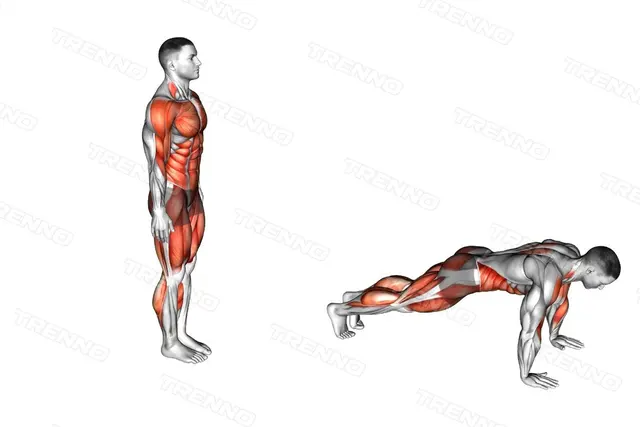
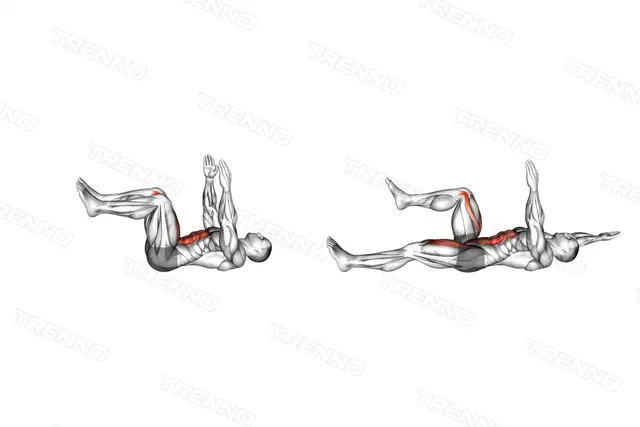
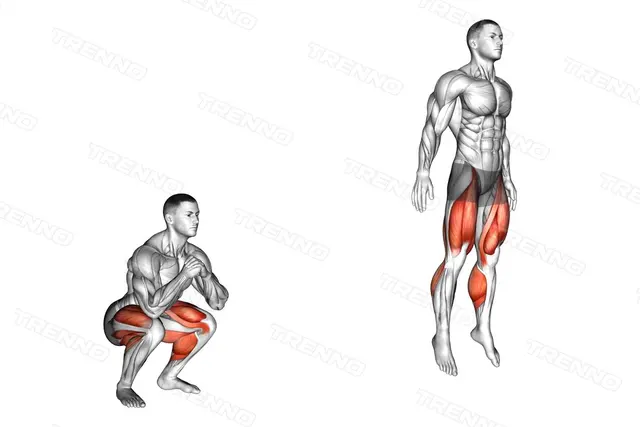
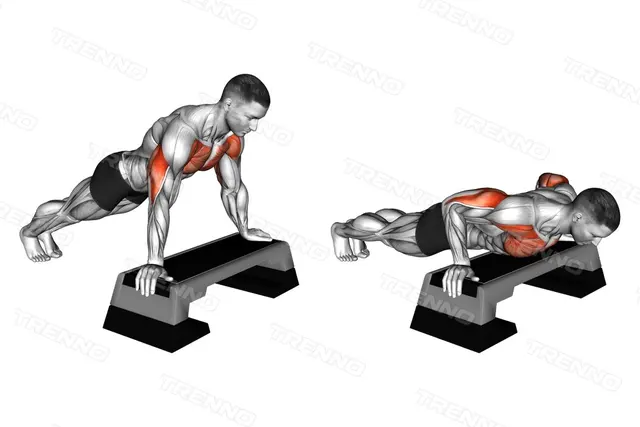

Who this plan is for
The program above is three short circuits a week for beginners who train at home with nothing but floor space, a wall and a chair or a step. Each circuit is five stations done back to back, three rounds, with a rest after every round. Nothing needs to be bought.
Short bodyweight intervals do raise fitness. In a 4-week study of 22 recreationally active women, one group trained four days a week with one exercise per session, burpees, jumping jacks, mountain climbers or squat thrusts, in eight 20-second bursts with 10 seconds of rest; another ran 30 minutes on a treadmill. Aerobic fitness rose about as much in both, about 8 percent against 7, and only the interval group improved its push-ups and sit-ups (McRae and colleagues, 2012). In 55 young men over 16 weeks, intervals of all-out calisthenics improved maximal oxygen uptake as much as treadmill intervals and steady running, though the running groups improved their running more (Schaun and colleagues, 2018).
Pick something else if:
- You want muscle and strength first. The bodyweight workout plan uses the same floor with sets, rest and harder versions of each exercise.
- You have a gym. The card under the plan, Full-Body Conditioning Circuit, runs the same kind of rounds with kettlebell swings, a jump rope, battle ropes and a rower. The fat loss workout plan pairs lifting with short cardio.
How the week works
| Monday | Wednesday | Friday | |
|---|---|---|---|
| Circuit | Home HIIT A | Home HIIT B | Home HIIT C |
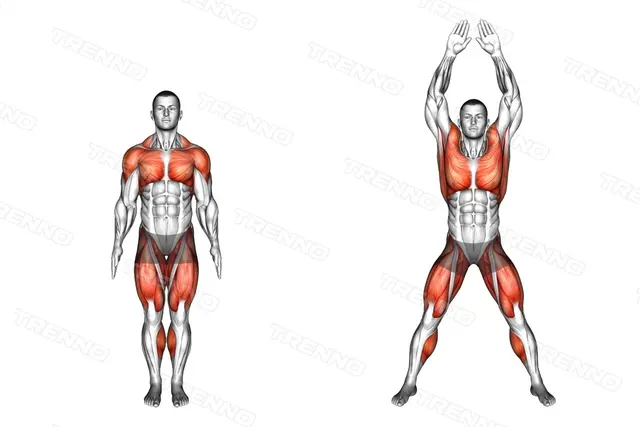
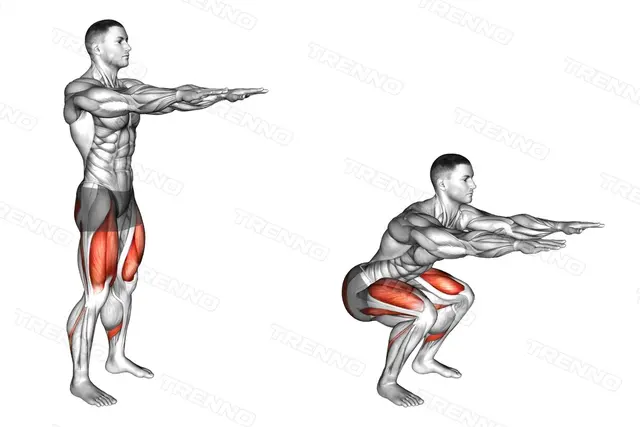
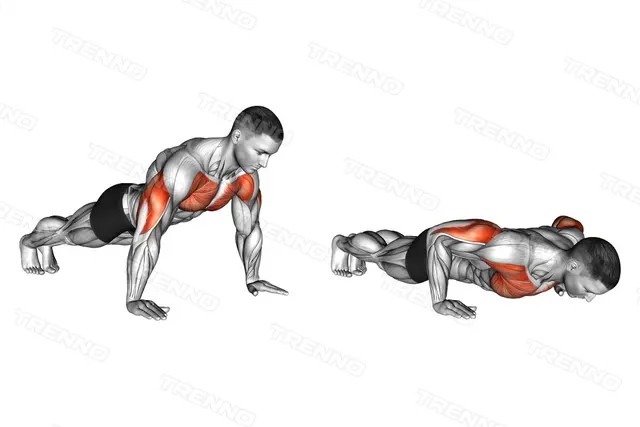
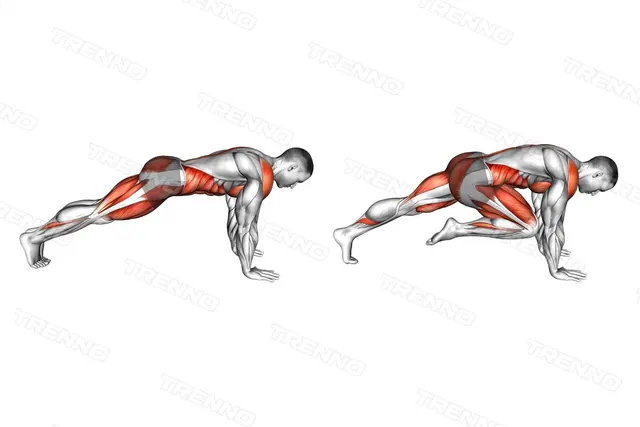
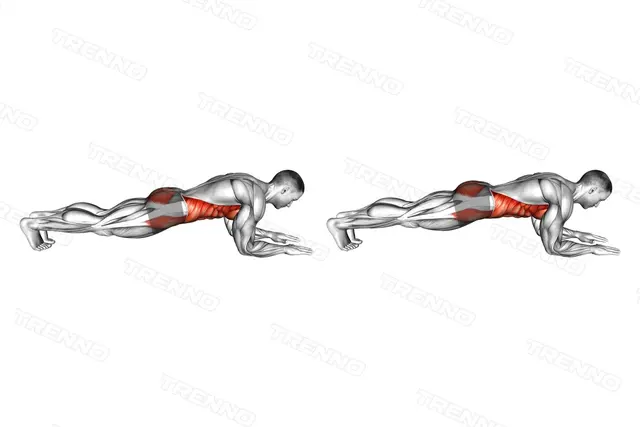
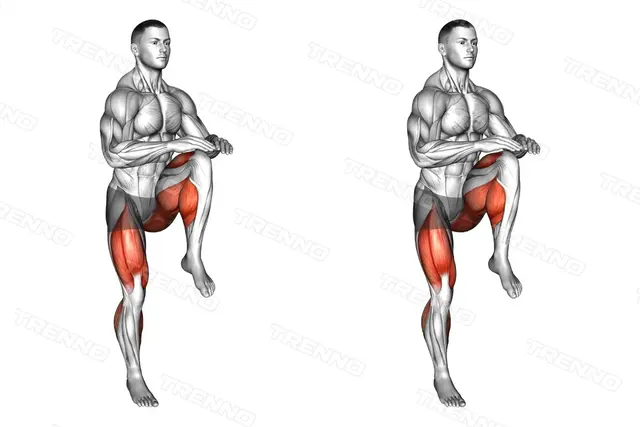
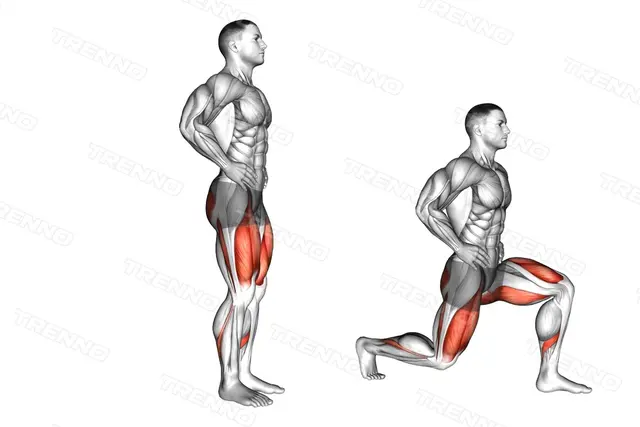
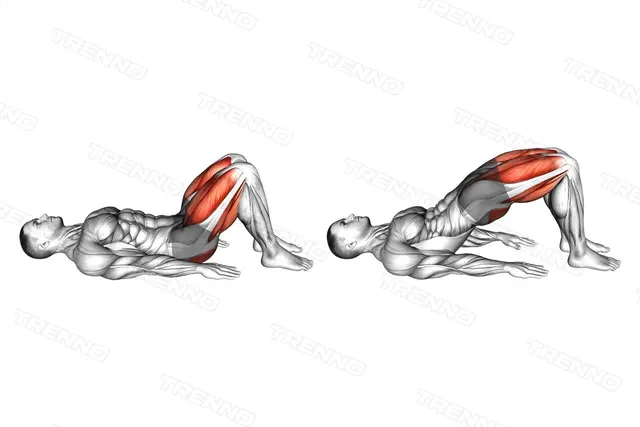
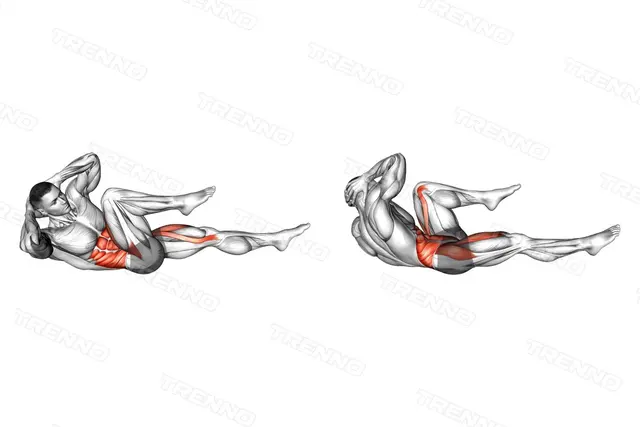
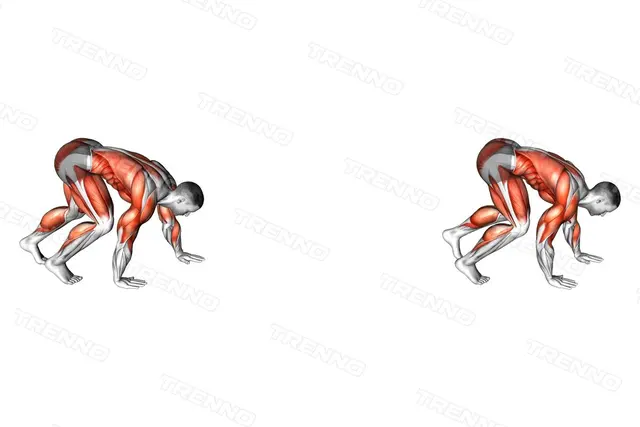
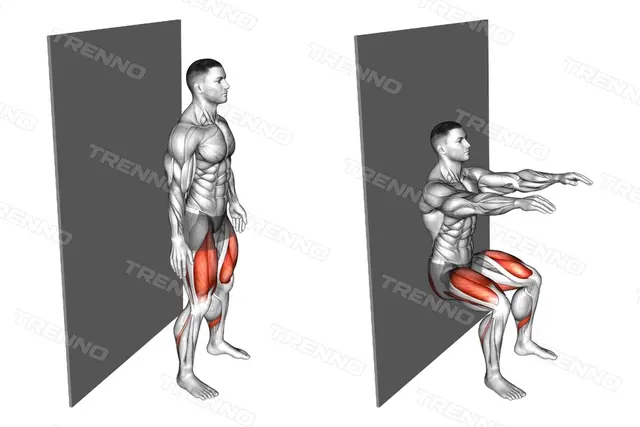
| Stations | Jumping Jack, Bodyweight Squat, Push-Up, Mountain Climbers, Plank | High Knees, Reverse Lunge, Glute Bridge, Burpee, Dead Bug | Jump Squat, Incline Push-Up, Bicycle Crunch, Bear Crawl, Wall Sit |
| Jumps | Jumping Jack | High Knees, Burpee | Jump Squat |
The program pins no weekdays; Monday, Wednesday and Friday is one way to keep a day between sessions. Walk on the days between. Each circuit mixes the legs, the trunk and a station that raises the heart rate: A leans on the squat and the push-up, B on the lunge and the bridge, C on the jump squat and the wall sit.
How a round works
- Five stations back to back. Timed stations run for the time on their row, 30 or 40 seconds; rep stations for their range, from 6 to 10 burpees to 15 to 25 bicycle crunches.
- 15 seconds to move from one station to the next.
- 1:30 of rest after the last station, then the next round. Three rounds make the session.
- A pace you can repeat. If the third round falls apart, the first was too fast. The round is done when all five stations are, not when you are out of breath.
Jumps and the neighbors
Four stations land on the floor with some force, and a floor above someone else’s ceiling passes it on. Each has a quiet version that keeps the station’s job:
| Station | Quiet version |
|---|---|
| Jumping Jack | A side step out and back with the same arm sweep |
| High Knees | Marching on Spot, knees to hip height |
| Burpee | Silent Burpee: walk the feet back and in, rise onto the toes |
| Jump Squat | Bodyweight Squat, standing up fast |
A quiet session is easier on the heart and lungs, so push the pace of the other stations a little. For the jumps you keep, land softly on the balls of the feet.
How to scale a round
| To make it | Easier | Harder |
|---|---|---|
| Rounds | 2 | 4 |
| Rest after a round | 2:00 | 1:00 |
| Push-ups | Kneeling Push-Up, or the Incline Push-Up higher | Decline Push-Up |
| Jumps | The quiet versions | As written |
Over the 12 weeks, one way to build up:
| Weeks | Rounds | What changes |
|---|---|---|
| 1 to 2 | 2 | Learn the stations; use the easier versions freely |
| 3 to 6 | 3 | The program as written |
| 7 to 12 | 3, then 4 | More reps inside each timed station; a fourth round once three stop being hard |
Count the reps you fit into a timed station and write them down: that number rising is how you know the rounds are getting easier.
How long a session takes
Counted at the times on the rows, about 40 seconds a station of reps, 15 seconds to move and 1:30 after each round: Home HIIT A takes about 16 and a half minutes, B and C about 17. That is about 50 minutes a week. Add five minutes of easy movement first: marching, arm circles, a few slow squats.
Explore has two more circuits for days outside the program, both with jumps. “Bodyweight HIIT Circuit” runs four stations for three rounds in about 16 minutes. “Jump Rope Intervals” takes a rope: four rounds of two minutes of skipping and two short stations, about 21 minutes.
What intervals can and cannot do
Intervals are a time-efficient way to get fitter. They are not a shortcut to losing fat. A meta-analysis of 13 studies in adults with overweight or obesity found that interval training and moderate continuous exercise both reduced fat mass and waist circumference, with no difference between them, and that the intervals took about 40 percent less time (Wewege and colleagues, 2017). The changes were modest and came without changes in body weight.
For health, the WHO recommends 150 to 300 minutes of moderate aerobic activity a week, or 75 to 150 minutes of vigorous activity, plus muscle strengthening on 2 or more days (Bull and colleagues, 2020). The program’s 50 minutes, much of it hard work, go a good way toward that; brisk walks on the other days make up the rest. Whether the scale moves depends on what you eat across the week.
Common mistakes
- Sprinting the first round. The second and third pay for it. Aim for three rounds that look the same.
- Cutting the rest after a round. The 1:30 is what lets the next round be hard again.
- Landing heavily. Land softly, knees bent, or take the quiet version.
- Adding sessions instead of rounds. Three circuits and daily walks are the plan; six circuits leave no day to recover.
FAQ
Is 17 minutes of HIIT enough?
For fitness, yes: the studies above found gains from four-minute sessions. For health, add walking on the other days toward the WHO’s weekly minutes.
Can I do HIIT every day?
The program is three days a week with a day between. On the other days, walk; the circuits are hard, and the next one should be too.
Will HIIT burn belly fat?
Not locally, and not faster than steady exercise: fat loss came out the same in the meta-analysis above. It saves time, which is a real reason to choose it.
Can beginners do HIIT at home?
Yes. The program is written for beginners, and every station has an easier version. Start with two rounds.
What if I live upstairs?
Use the quiet versions for the four jumping stations. The circuit stays the same length and still raises your heart rate.
Sources
- McRae G and colleagues. Extremely low volume, whole-body aerobic-resistance training improves aerobic fitness and muscular endurance in females. Applied Physiology, Nutrition, and Metabolism, 2012.
- Schaun GZ, Pinto SS, Silva MR, Dolinski DB, Alberton CL. Whole-body high-intensity interval training induce similar cardiorespiratory adaptations compared with traditional high-intensity interval training and moderate-intensity continuous training in healthy men. Journal of Strength and Conditioning Research, 2018.
- Wewege M, van den Berg R, Ward RE, Keech A. The effects of high-intensity interval training vs. moderate-intensity continuous training on body composition in overweight and obese adults: a systematic review and meta-analysis. Obesity Reviews, 2017.
- Bull FC and colleagues. World Health Organization 2020 guidelines on physical activity and sedentary behaviour. British Journal of Sports Medicine, 2020.
The program and both circuits are in Trenno’s Explore. Each circuit is one superset block: a round is one set of every station, and “Add round” gives each station one more set when you are ready for a fourth. The clock on the workout screen has a timer for the timed stations.