
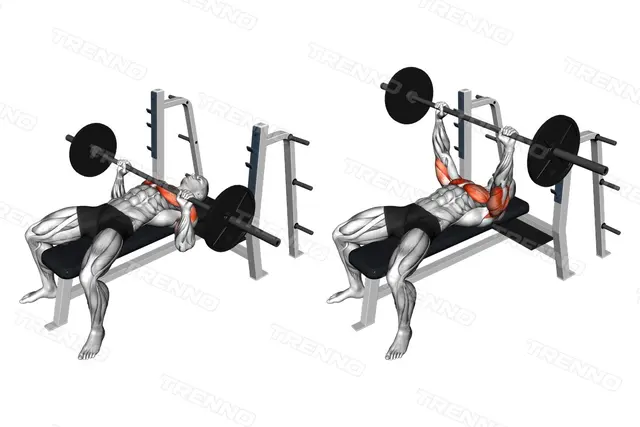
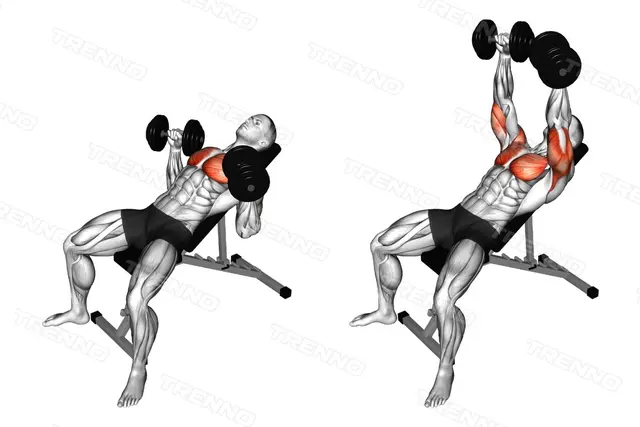
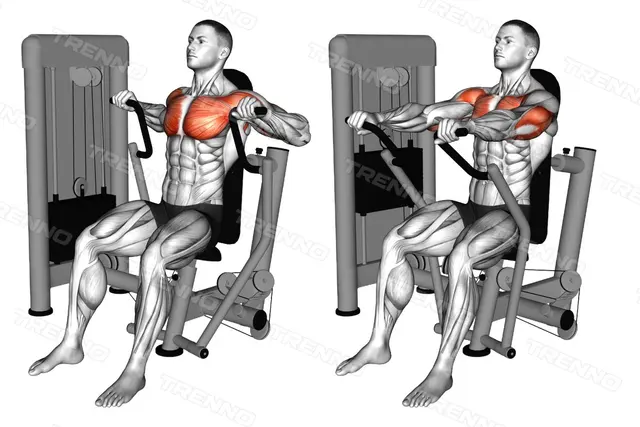
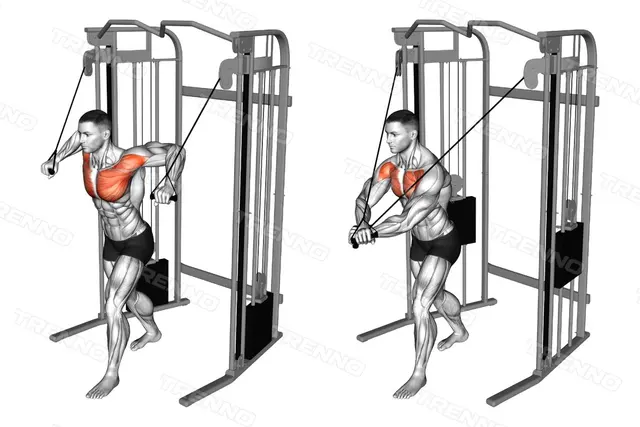
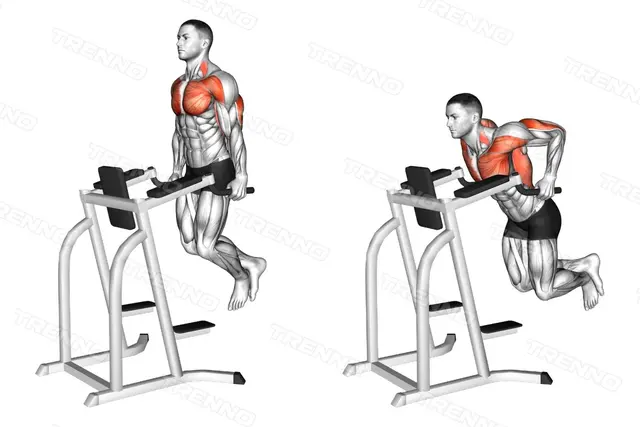
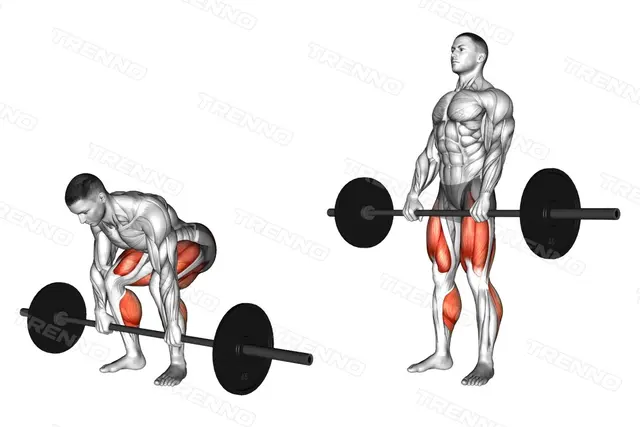
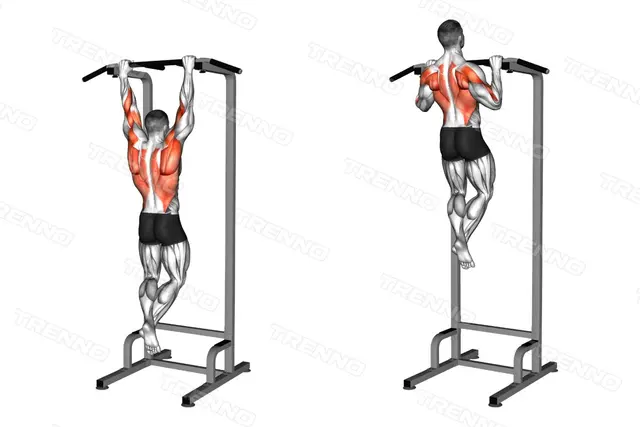
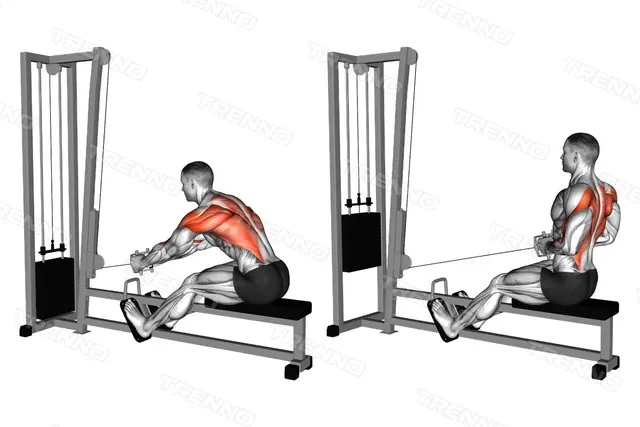
Who this plan is for
A body-part split, the bro split of every gym, gives each muscle group a day of its own: chest on Monday, back on Tuesday, and so on. The plan above is for intermediate lifters who can train five days a week without missing, and who like one long, focused session per muscle more than short visits to all of them.
Choose something else if:
- You are in your first months of lifting. The American College of Sports Medicine recommends 2 to 3 days a week for novices, and full-body sessions practice the lifts more often: start with the 3-day full-body plan.
- You often miss a day. In this split a missed day is a muscle group untrained for two weeks. A four-day upper/lower split forgives a missed session better.
How the week works
| Day | Session | Opens with |
|---|---|---|
| Monday | Chest Day | Barbell Bench Press |
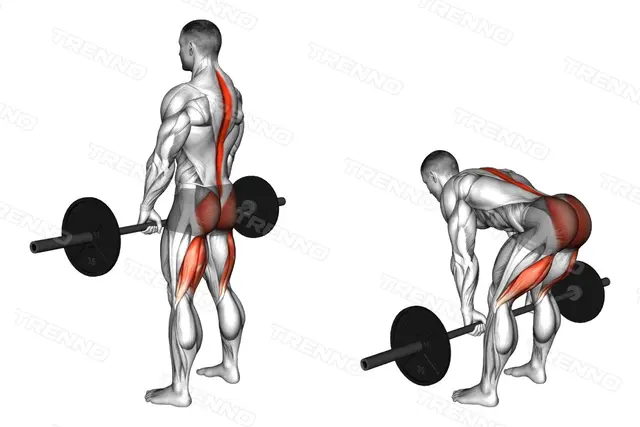
| Tuesday | Back Day | Deadlift |
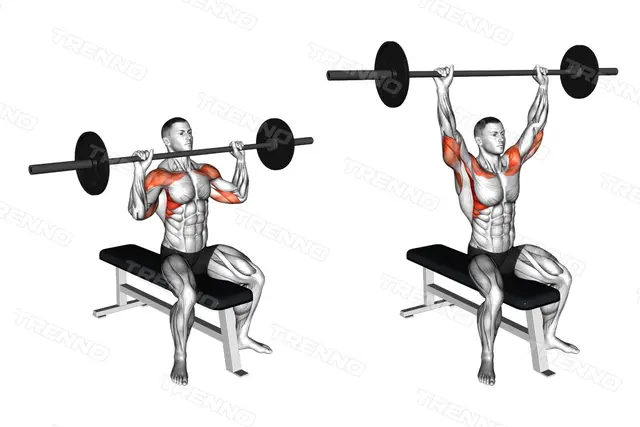
| Wednesday | Shoulders Day | Seated Barbell Overhead Press |
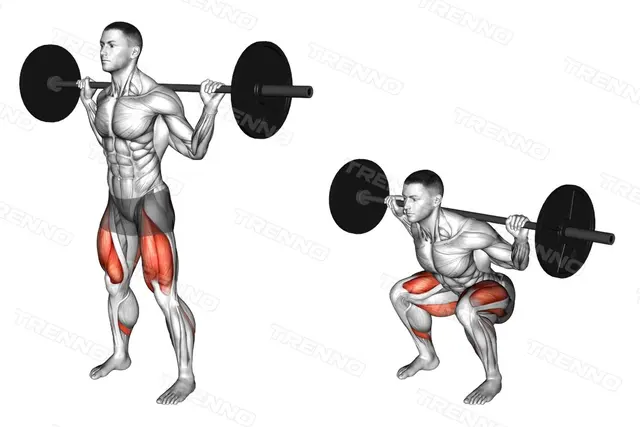
| Thursday | Legs and Glutes | Barbell Back Squat |
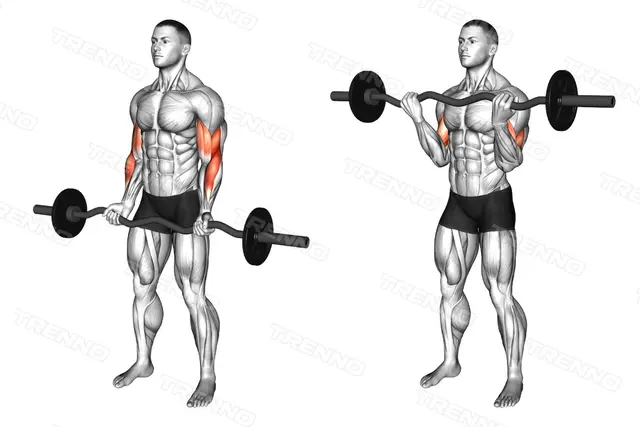
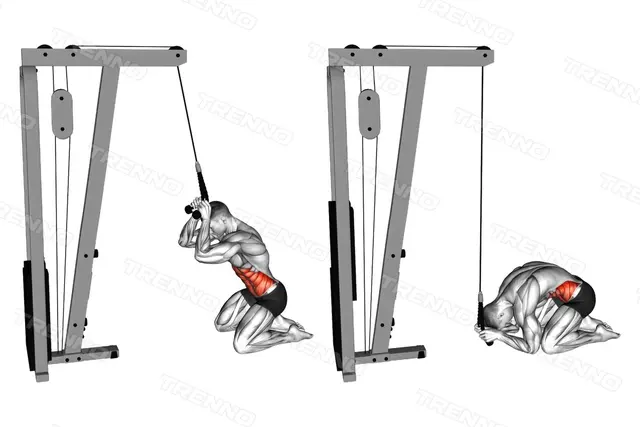
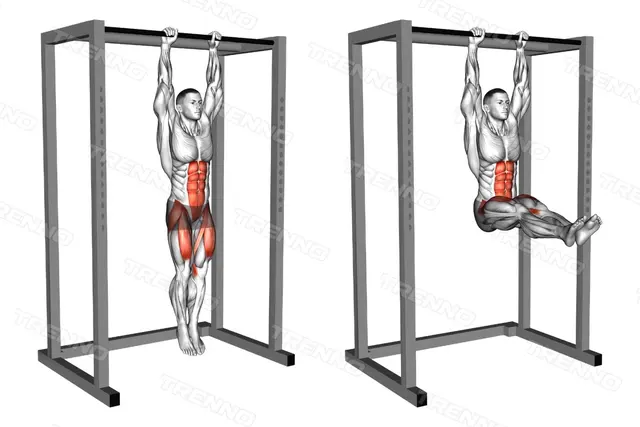
| Friday | Arms and Abs | EZ-Bar Biceps Curl |
| Saturday and Sunday | Rest |
The order spaces out the muscles that work on more than one day. The chest day presses with the shoulders and the triceps, so the shoulders come two days later. The deadlift on Tuesday and the squats on Thursday have a day between them. Arms come last, after the back day has worked the biceps and two pressing days the triceps, and the weekend lies between arms and chest.
Once a week or twice: the honest trade-off
Each muscle has one hard day a week here. Is that enough? The research says it depends on the weekly sets more than on the days:
- A meta-analysis found that training a muscle twice a week grew more than once when the total work was the same (Schoenfeld and colleagues, 2016).
- A larger one, 25 studies, found no real difference between frequencies when the weekly sets were the same, and concluded that you can pick the frequency you prefer (Schoenfeld and colleagues, 2019).
- In well-trained men, 3 full-body sessions a week grew the forearm flexors more than a split that trained each muscle once, with no difference in strength (Schoenfeld and colleagues, 2015).
So a body-part split works when it gives each muscle enough hard sets. Counted by the body part each exercise is filed under in our exercise library, this one gives:
| Body part | Sets a week | Days it works |
|---|---|---|
| Chest | 16 | Monday |
| Shoulders | 17 | Wednesday, and Monday’s presses |
| Back | 12 | Tuesday |
| Quadriceps | 7 | Thursday |
| Hamstrings | 6 | Thursday |
| Biceps | 6 | Friday, and Tuesday’s pulls |
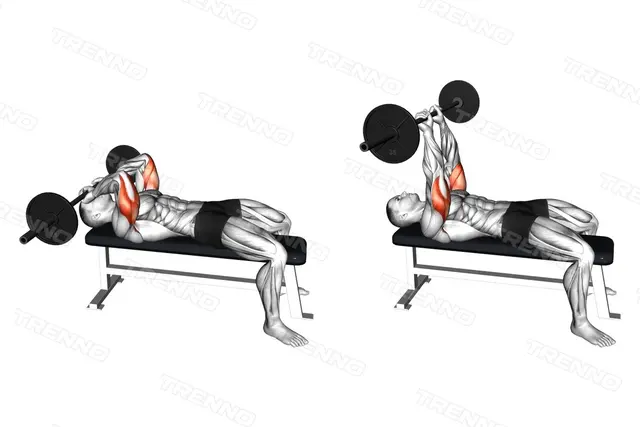
| Triceps | 6 | Friday, and two days of presses |
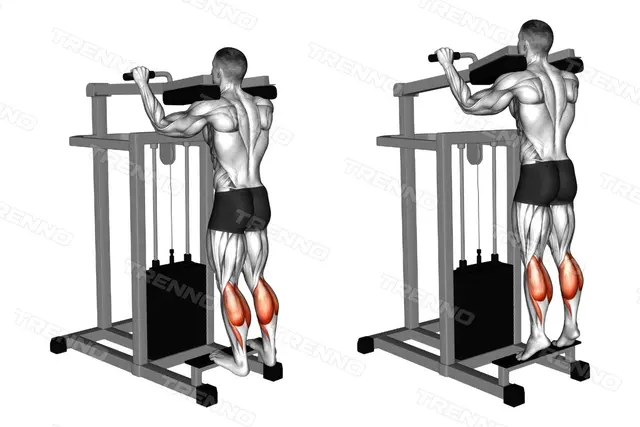
| Calves | 4 | Thursday |
The upper body gets the volume; the legs get one long day. If your legs matter as much as your chest, the five-day alternative below is the better week.
Sets, reps, rest and effort
- The first lift of each day takes 4 sets of 6 to 10 reps after 2 warm-up sets, with 2:30 of rest. The Deadlift takes 3 sets of 5 to 8 and 3:00.
- The other exercises take 3 or 4 sets, with 1:30 of rest on the bigger ones and 1:00 on the small ones, which run the higher ranges of 12 to 15, 12 to 20 or 15 to 20.
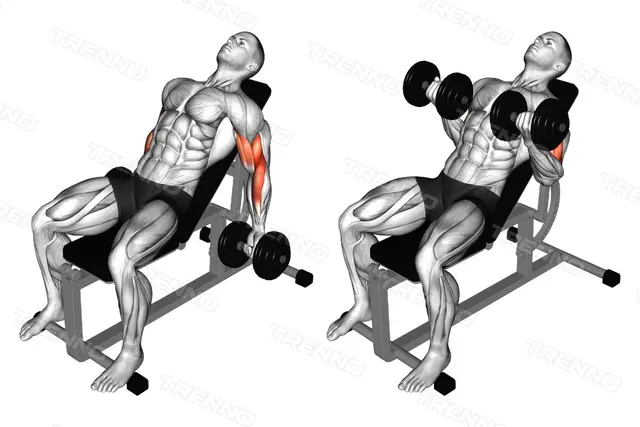
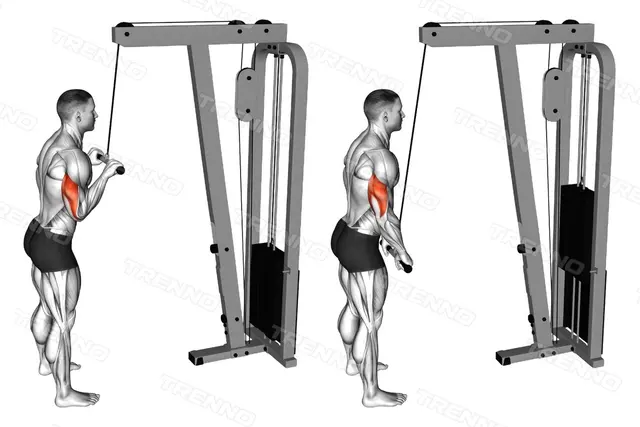
- Arms and Abs is the short day: every set rests a minute, and the Incline Dumbbell Curl and the Cable Triceps Pushdown run as a superset.
With five exercises for one muscle group, the last sets are where effort slips. Keep 1 to 3 reps in reserve on the first lift and 0 to 2 on the last exercises; going all the way to failure is not needed for growth (Refalo and colleagues, 2023).
How to progress
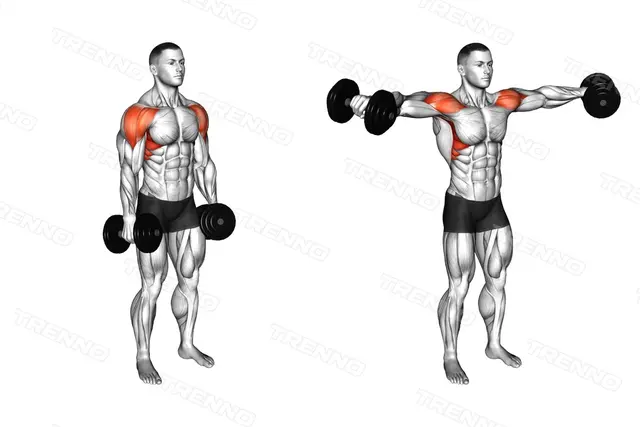
Double progression, as in our progressive overload guide: keep the weight until every set reaches the top of the range, then add the smallest step. It matters most on small dumbbells, where the next pair can be 25 percent heavier. The Dumbbell Lateral Raise on Wednesday, 4 sets of 12 to 20:
| Week | Weight per hand | Reps per set | Next session |
|---|---|---|---|
| 1 | 8 kg (about 18 lb) | 16, 15, 14, 13 | same weight |
| 2 | 8 kg | 18, 17, 16, 15 | same weight |
| 3 | 8 kg | 20, 19, 18, 17 | same weight |
| 4 | 8 kg | 20, 20, 20, 19 | same weight |
| 5 | 8 kg | 20, 20, 20, 20 | the next pair |
| 6 | 10 kg | 14, 13, 12, 12 | same weight |
The wide range is what makes the jump possible: the reps fall back toward the bottom and climb again.
A five-day alternative: push pull legs plus upper/lower
If you want five days and every muscle twice, combine the push pull legs and the upper/lower days. Both programs are in Trenno’s Explore:
| Day | Session | From |
|---|---|---|
| Monday | Push Day | Intermediate Push Pull Legs, 3 days |
| Tuesday | Pull Day | Intermediate Push Pull Legs, 3 days |
| Wednesday | Legs Day | Intermediate Push Pull Legs, 3 days |
| Thursday | Rest | |
| Friday | Upper Body: Overhead Press | Intermediate Upper/Lower, 4 days |
| Saturday | Lower Body: Deadlift | Intermediate Upper/Lower, 4 days |
| Sunday | Rest |
Every muscle gets two days, the squats and the deadlifts are three days apart, and the two upper sessions differ: the bench press on Monday, the overhead press on Friday.
Substitutions
| Instead of | If | Do |
|---|---|---|
| Chest Dip | Dips hurt or there is no station | Decline Push-Up |
| Cable Crossover | The cables are busy | Pec Deck |
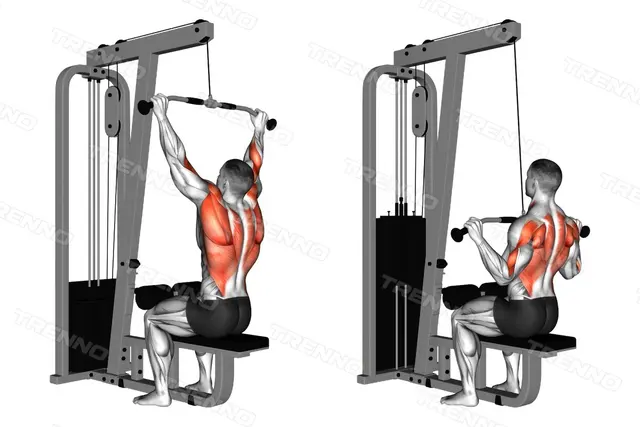
| Pull-Up | You cannot do one yet | Pull-Up (Assisted) or the Lat Pulldown |
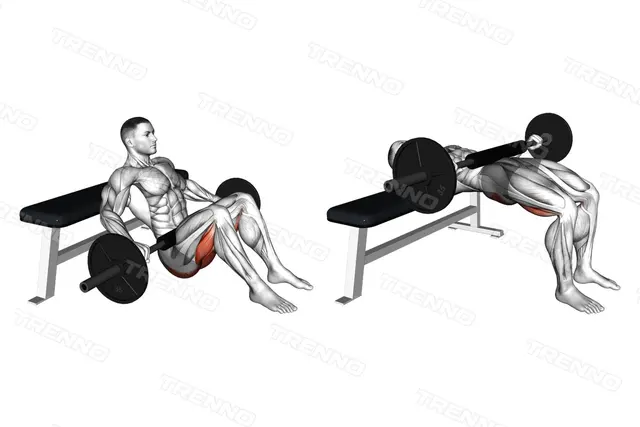
| Barbell Hip Thrust | Setting up the bar takes too long | Machine Hip Thrust |
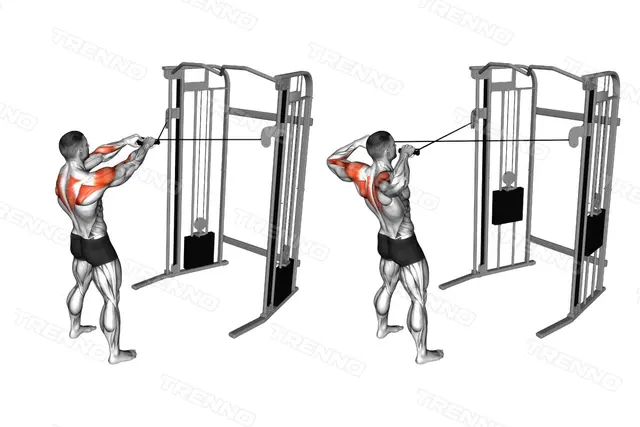
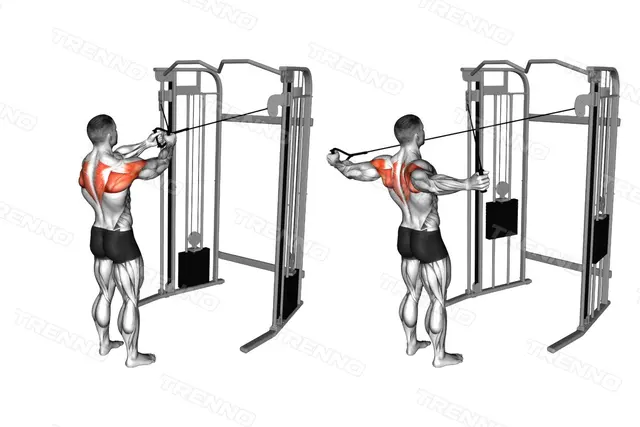
| Cable Rear Delt Fly | There is no cable station | Dumbbell Rear Delt Fly |
| Barbell Back Squat | No squat rack is free | Hack Squat |
Keep the sets, the reps and the rest of the exercise you replace.
How long a session takes
At about 40 seconds a working set, the prescribed rest, a minute per warm-up set and 5 minutes to set up: the chest, back and shoulder days take 40 to 45 minutes, the legs day about 50 and the arms day about 35. Add 5 to 10 minutes of warm-up. The week comes to about 4 hours.
Common mistakes
- Skipping legs. One leg day a week is easy to drop, and then there is none.
- Adding exercises to a long day. A sixth chest exercise at the end of an hour adds tired sets, not growth.
- Letting a missed day disappear. Shift the week by a day instead of skipping a body part.
- Moving the shoulder day next to the chest day. Both press; the order above keeps a day between them.
FAQ
Is a bro split good for building muscle?
Yes, when it gives each muscle enough hard sets, as this one does for the upper body. When weekly sets are equal, how often you train a muscle matters little. The limit is the day itself: past five or six exercises for one muscle, the extra sets are done tired.
Is the bro split good for beginners?
Not at the start. A beginner learns the lifts faster by practicing them several times a week, which is what a full-body plan does.
What if I miss a day?
Do it the next day and move the rest of the week along, using the weekend as the buffer. Do not drop the body part.
Why is there an arm day when chest and back days already work the arms?
Pressing works the triceps and pulling the biceps, but only as helpers. The arm day adds 6 direct sets for each.
Sources
- Schoenfeld BJ, Ogborn D, Krieger JW. Effects of resistance training frequency on measures of muscle hypertrophy: a systematic review and meta-analysis. Sports Medicine, 2016.
- Schoenfeld BJ, Grgic J, Krieger J. How many times per week should a muscle be trained to maximize muscle hypertrophy? Journal of Sports Sciences, 2019.
- Schoenfeld BJ, Ratamess NA, Peterson MD, Contreras B, Tiryaki-Sonmez G. Influence of resistance training frequency on muscular adaptations in well-trained men. Journal of Strength and Conditioning Research, 2015.
- Refalo MC, Helms ER, Trexler ET, Hamilton DL, Fyfe JJ. Influence of resistance training proximity-to-failure on skeletal muscle hypertrophy. Sports Medicine, 2023.
- American College of Sports Medicine. Progression models in resistance training for healthy adults. Medicine and Science in Sports and Exercise, 2009.
The program is in Trenno’s Explore with its days, sets and rest times. The previous session’s sets show beside the empty ones, and the rest timer starts when you tick a set.