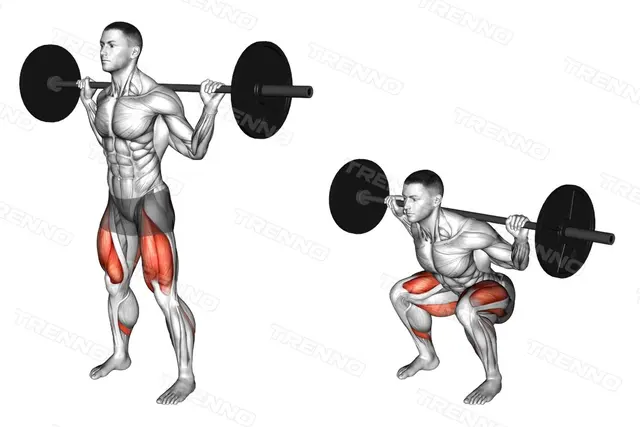
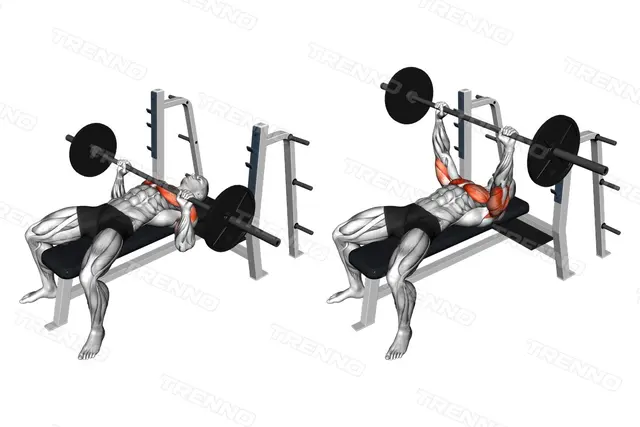
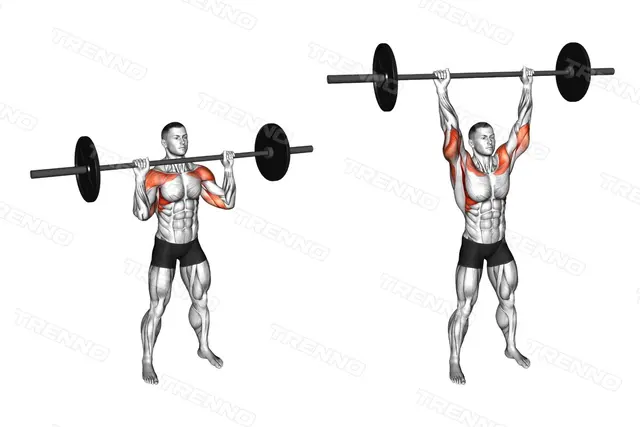
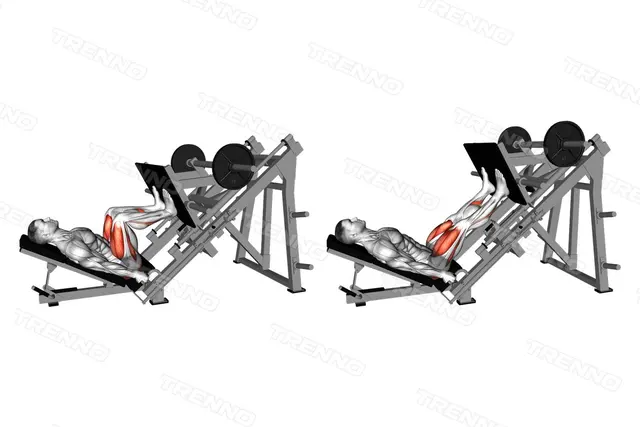
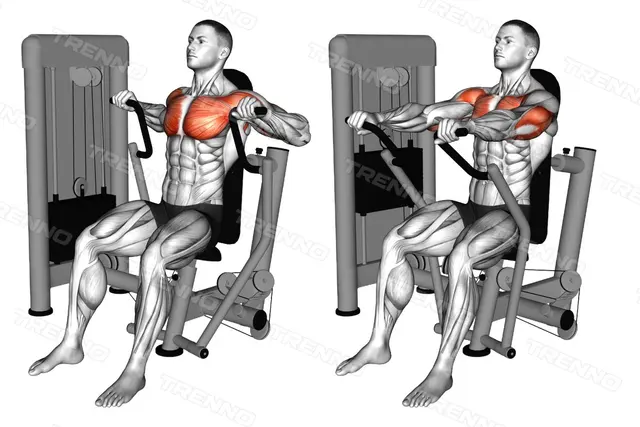
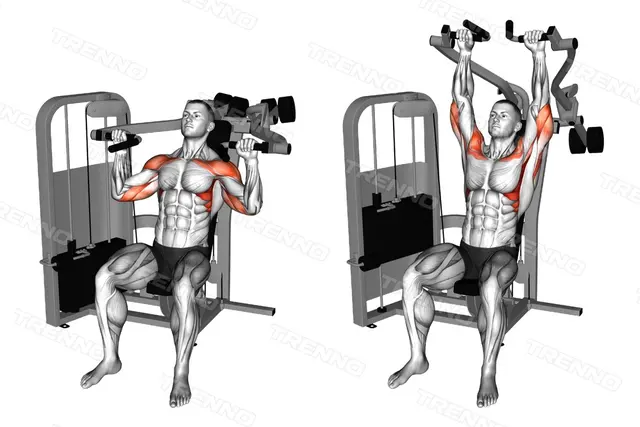
Free weights are the barbells, dumbbells and kettlebells you move through space yourself; machines guide the weight along a fixed path, from a weight stack or a sled. Cables sit between the two: a stack sets the load, but you choose the path. Gym folklore gives the free weights every prize. The studies are calmer about it.
The short answer
For muscle, it makes no measurable difference: studies that compare the two find the same growth. For strength, each builds most on the equipment you trained with, so barbell training shows more on a barbell test and machine training on a machine. Choose by your goal, by what your gym has and by what you will keep doing, and use both: most good programs do.
What the research found
- Muscle: no difference. A 2023 meta-analysis of 13 studies with 1,016 people found no difference in muscle growth, jump height or strength when free-weight and machine training were compared head to head. A 2022 meta-analysis found no difference in muscle growth or power either.
- Strength: specific to the tool. In both analyses, people who trained with free weights gained more on free-weight tests. On machine tests, machine training did better in the 2022 analysis and tended to in the 2023 one. Tested on a neutral device, the 2022 analysis found the two about equal.
- One trial, both outcomes. In an 8-week trial of 46 young men and women, the biceps and the thighs grew the same with either kind of training. Free-weight squat and bench press strength rose by 11 to 19 percent in both groups, and only the machine bench press improved more after machine training.
- The big picture. The American College of Sports Medicine’s 2026 position stand, an overview of 137 reviews, found that choosing machines or free weights did not change strength gains, and could not decide for muscle size. A review of time-efficient training suggests choosing by goals, what is available and personal preference.
So the equipment is a means. The muscle grows from hard sets close to failure, whatever moves the weight.
Where each one helps
| Free weights | Machines | |
|---|---|---|
| The path | You control it, and balance is part of the lift | The machine sets it; you just push or pull |
| Learning | More to learn at first | Quick to learn |
| Loading | Plates and dumbbells in fixed steps | A pin in a stack; each machine differs |
| Close to failure | Heavy squats and bench presses want a spotter or safety bars | A missed rep simply ends the set |
| The numbers | The same bar in any gym | They do not carry over between machines |
| Isolation work | Dumbbells cover much of it | Where machines and cables are handiest |
What it means for your week
Of the 397 exercise rows in our 25 programs, 182 use free weights (76 a barbell or an EZ bar, 63 dumbbells, 43 kettlebells), 97 a machine or a cable (53 and 44), 97 body weight and 15 suspension straps; the other 6 are conditioning stations such as the rower. The muscle-building programs for the gym mix the two almost evenly. Advanced Push Pull Legs, 6 days has 17 rows with a barbell or dumbbells, 16 on machines or cables and 3 with body weight: most of the heavy compound lifts come on free weights, and much of the isolation work on cables and machines.
Two programs lean the other way on purpose. Beginner Full-Body Machines, 3 days uses no free weights at all, for people new to barbells or returning after years away, and Beginner Full-Body, 2 days runs mostly on machines while the movements are learned. At the other end, the dumbbell, kettlebell and bodyweight programs need no machine. Whichever you start with, the muscle you build is the same; How Much Weight Should You Lift? explains how to find a starting weight on each.
How to apply it
- Train the lifts you want to be strong at with the equipment you want to be strong on.
- Use machines and cables for isolation work and for sets you want to take close to failure without a spotter.
- Swap freely when the gym is busy. A Leg Press for the Barbell Back Squat, a Machine Chest Press for the Barbell Bench Press, a Machine Shoulder Press for the Standing Barbell Overhead Press: the muscles do not know.
- Keep the same machine for an exercise while you progress, and note its seat setting.
- Retest on the tool you trained. Strength gained on a machine shows best on that machine.
In Trenno a busy machine is one tap away from a substitute: Replace exercise on the exercise card swaps it for another in the running workout. A routine’s note under each exercise comes back every time the routine starts, a good place for the seat setting. In Explore, the Filters sheet narrows the programs by the equipment they need: Gym, Dumbbells or None. Our exercise library lists every exercise by equipment as well, from the barbell to the leverage machines.
Mistakes and myths
- “Free weights build more muscle because of the stabilizers.” Compared directly, the growth was the same.
- “Machines are for beginners.” They build muscle at every level; the stand found no difference in strength gains either.
- Judging progress across machines. A new gym’s chest press is a new exercise; find its starting weight again.
- Avoiding free weights for ever. If you want a strong barbell squat, the barbell squat is what builds it.
FAQ
Can I build muscle with machines only?
Yes. The meta-analyses found the same growth, and our machines program is built that way.
Are cables free weights or machines?
Between the two: the stack sets the load, and you control the path. Our count above puts them with the machines.
Should a beginner start with machines?
Either works. Machines are quicker to learn; free weights teach the lifts most programs build on. Our beginner programs take both routes: machines only, mostly machines, a barbell or dumbbells.
Will machine training make me stronger on the barbell?
Partly. Strength carries over between the two, but each shows most on the tool you trained with.
Sources
- Haugen ME, Vårvik FT, Larsen S, et al. Effect of free-weight vs. machine-based strength training on maximal strength, hypertrophy and jump performance: a systematic review and meta-analysis. BMC Sports Science, Medicine and Rehabilitation, 2023.
- Heidel KA, Novak ZJ, Dankel SJ. Machines and free weight exercises: a systematic review and meta-analysis comparing changes in muscle size, strength, and power. The Journal of Sports Medicine and Physical Fitness, 2022.
- Schwanbeck SR, Cornish SM, Barss T, Chilibeck PD. Effects of Training With Free Weights Versus Machines on Muscle Mass, Strength, Free Testosterone, and Free Cortisol Levels. Journal of Strength and Conditioning Research, 2020.
- Currier BS, D’Souza AC, Singh MAF, et al. American College of Sports Medicine Position Stand. Resistance Training Prescription for Muscle Function, Hypertrophy, and Physical Performance in Healthy Adults: An Overview of Reviews. Medicine and Science in Sports and Exercise, 2026.
- Iversen VM, Norum M, Schoenfeld BJ, Fimland MS. No Time to Lift? Designing Time-Efficient Training Programs for Strength and Hypertrophy: A Narrative Review. Sports Medicine, 2021.